Weigh-Fill vs Count-Fill for Clamshell Produce Packing
Oct 31, 2026
Compare weigh-fill and count-fill for produce clamshells, including giveaway, product damage, accuracy, and practical equipment trial requirements.
Start With the Package Promise
A clamshell marked 16 ounces and a clamshell marked six apples make different promises. The first needs a controlled net weight. The second needs the correct number of pieces. That distinction should drive the filling method before anyone starts comparing equipment.
Weigh-fill portions produce by weight. Count-fill portions it by individual units. Both can work well, but neither solves inconsistent incoming product, poor container presentation, or a badly matched discharge chute. I would start with the sale specification, then look at how the produce behaves.
How Weigh-Fill Works
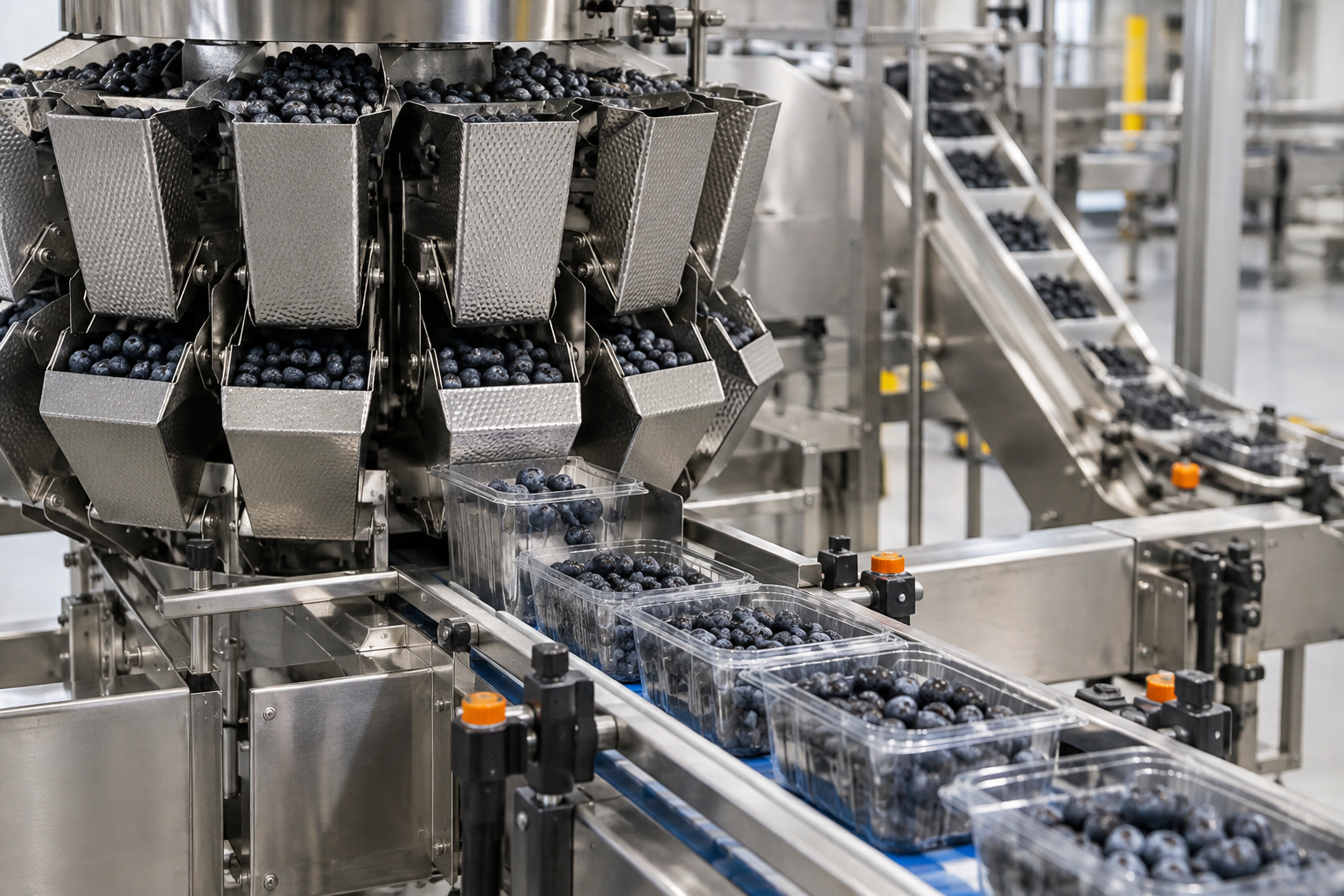
A weigh-fill system measures a portion before or during delivery into the clamshell. Depending on the equipment, product may feed into a weigh hopper, several weighing buckets, or a container supported on a scale. The control system stops or selects product flow to reach a target.
Combination weighers select among available weighed portions to approach the target. Other systems use a faster initial feed followed by a slower finishing feed. The right arrangement depends on piece size, stickiness, damage sensitivity, and required output.
Berries, cherry tomatoes, and grapes sold by net weight are natural candidates. However, a scale does not guarantee that every finished pack is correct. Product can remain in a hopper, spill during discharge, or arrive after the cutoff point. Finished-package checks still matter.
How Count-Fill Works
Count-fill meters a specified number of pieces into each container. A system may use lanes, pockets, sensors, or vision to identify and release individual items. Its first job is singulation: getting pieces separated enough to count reliably.
Six similarly sized apples are a different counting problem from six touching mini cucumbers. Doubles, overlapping pieces, attached stems, and fragments can all complicate detection. A counter can register the correct number of events without delivering the correct number of saleable pieces.
Count-fill suits produce sold by a fixed piece count, especially when individual items are large enough to separate and handle consistently. It does not control net weight unless weighing is added. Six pieces from one lot may weigh noticeably more than six from another.
Match the Method to the SKU
- Small produce sold by weight: Weigh-fill is usually the starting point for blueberries, grape tomatoes, and similar products.
- Larger produce sold by piece count: Count-fill is worth testing for apples, citrus, or other discrete items that fit the package consistently.
- A pack specifying both count and weight: Use counting with weight verification, or another validated process that controls both requirements.
- Highly variable or delicate produce: Test handling first. A technically accurate filler can still create unacceptable bruising or poor presentation.
Check the actual customer specification and applicable labeling requirements. Do not assume that changing the filler lets you change the declared quantity. Packaging statements and quantity-control procedures need to agree.
Compare Giveaway With the Whole Cost
With weigh-fill, excessive target weight creates giveaway. Suppose a line averages 0.3 ounce above its intended target across 20,000 packs. That is 6,000 ounces, or 375 pounds, of additional produce per shift. This is an illustrative calculation, not an expected machine result.
The answer is not simply lowering the target. Review weight variation, scale performance, product remaining in flight after cutoff, and finished-pack results. Set operating limits through a documented quantity-control program rather than treating the label weight as a universal machine setpoint.
Count-fill has a different cost pattern. A six-count pack containing seven pieces gives away one whole item. A correctly counted pack may also carry more product mass when the incoming size grade runs large. If produce is purchased by the pound but sold by the pack, that variation affects margin.
Compare saleable packs per paid labor hour, product giveaway, rejects, and damage. The lowest purchase price can become expensive if operators spend the shift correcting fills.
Handling Often Decides the Winner
Watch the transfer into the clamshell. Long drops, narrow openings, and abrupt changes in direction can undermine either filling method. A portion that lands against the hinge may keep the lid from seating even when the quantity is correct.
For weigh-fill trials, inspect hopper surfaces, gate openings, and retained product. For count-fill trials, look for pinch points, doubles, and pieces riding over one another. Test wet produce as well as dry produce when both conditions occur in production.
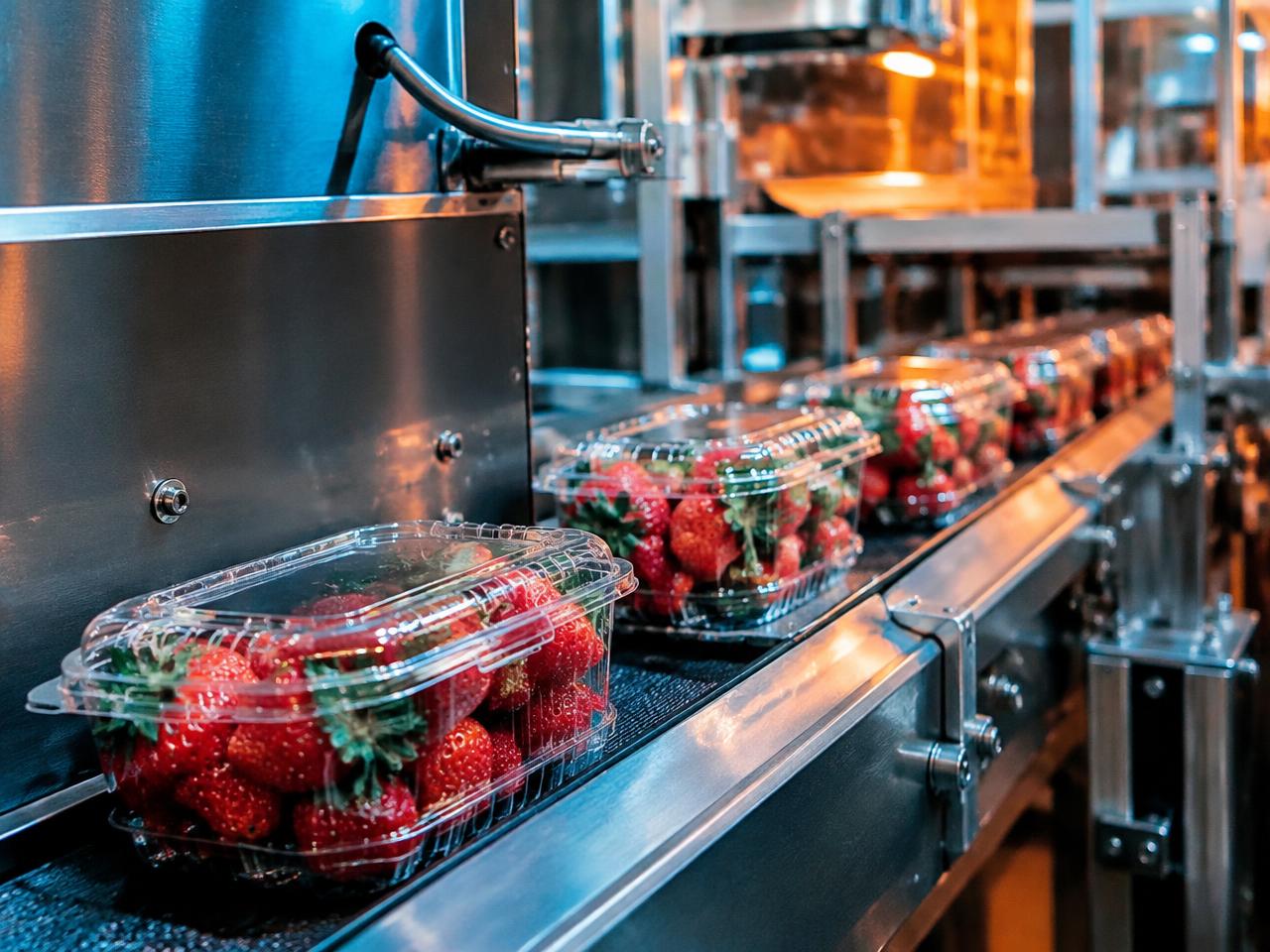
Our Clamshell Filling Systems are intended for accurate weighing and filling of fresh product. The equipment discussion should include your actual produce and containers, not just a nominal package weight.
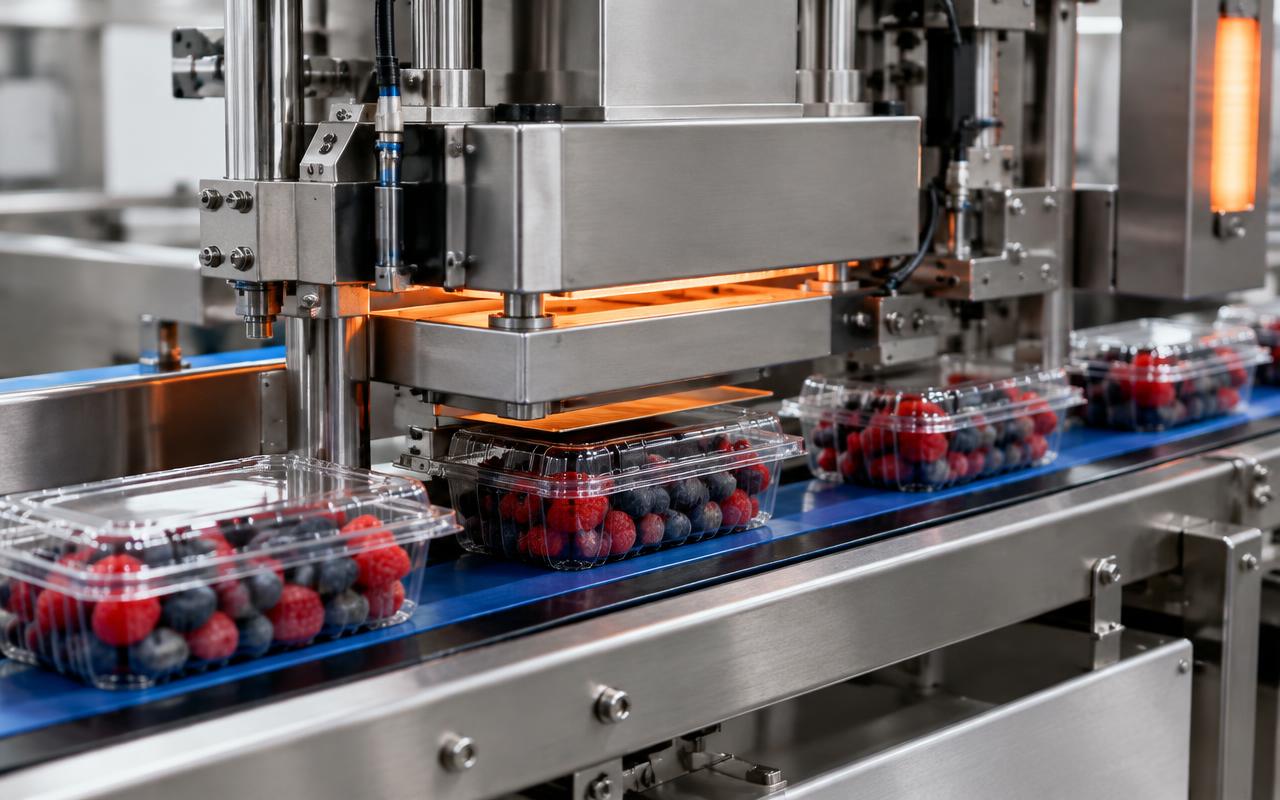
Closing also needs a trial. Our Clamshell Closing Machine handles 8-64 oz tamper-evident hinged containers at up to 80 containers per minute. That rating does not establish the output of the whole line. Overfilled packages, trapped stems, and inconsistent spacing can limit usable production.
Run a Trial That Resembles a Shift
Bring more than the best-looking sample case. Include the smallest and largest expected pieces, normal moisture variation, and containers from production inventory. Agree on acceptance criteria before the demonstration.
- Quantity: Record individual net weights or manually verified piece counts, including rejected packs.
- Condition: Inspect for splits, crushed fruit, scuffing, and juice accumulation after handling.
- Presentation: Check product distribution, lid clearance, and closure quality.
- Recovery: Observe restarts, low-feed conditions, blocked containers, and operator intervention.
- Changeover: Time recipe changes, tooling adjustments, cleaning, and verification.
For broader equipment planning, PackagingMachine.com is another resource to consult. Keep the discussion grounded in the same product samples and acceptance criteria across suppliers.
Choose weigh-fill when weight is the primary promise. Choose count-fill when piece count is the primary promise and the product can be separated reliably. When both matter, verify both. That is usually less costly than asking operators to compensate for the wrong filling method.
Questions and Answers
Can a weigh-filler reliably make a six-count apple pack?
Weight alone cannot guarantee six apples because individual weights vary. Use a counting process when six pieces are required, and add weight verification if the package also has a weight requirement.
Why does a correct weigh-hopper reading produce a light clamshell?
Some of the weighed portion may remain in the hopper or miss the container during discharge. Check for retained product, spills, container position, and scale performance before changing the target.
What should we test before count-filling mini cucumbers?
Test separation across the expected length, curvature, and moisture range. Verify that touching cucumbers are not counted as one, that fragments do not trigger false counts, and that every counted piece reaches the intended clamshell.
Explore the machines
- Clamshell Denester — Separates nested clamshells and places them on the line.
- Clamshell Filling Systems — Accurate weighing and filling of fresh product.
- Clamshell Closing Machine — Closes and locks hinged clamshell lids automatically.
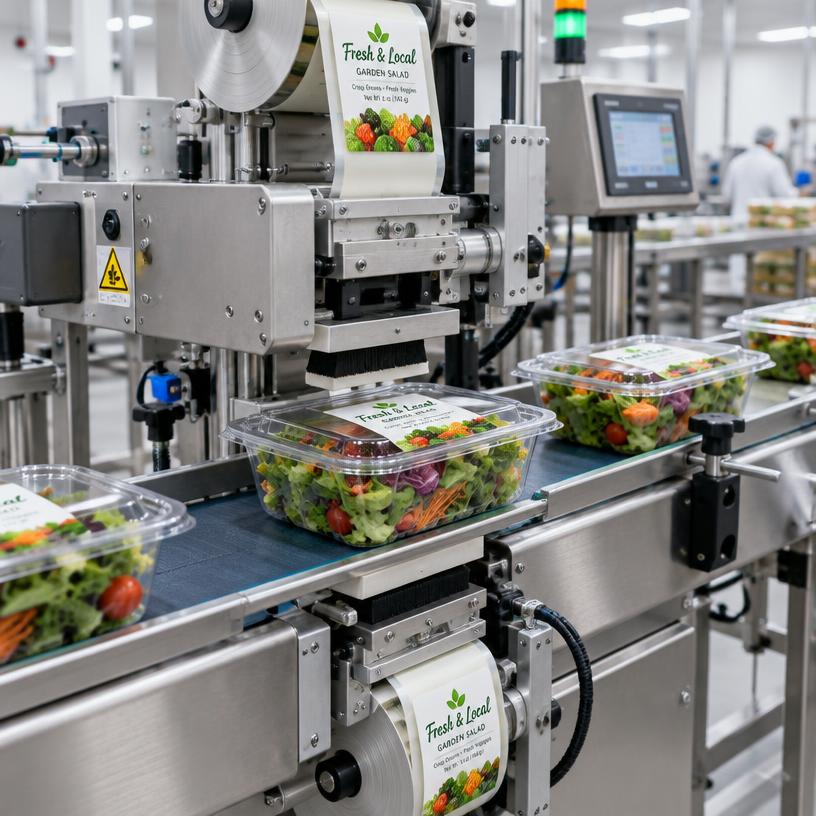
- Clamshell Labeler — Top, bottom and wrap labeling with print-and-apply options.
- End-of-Line Systems — Case packing, case sealing and palletizing.