How to automate a clamshell packaging line, step by step
Sep 10, 2026
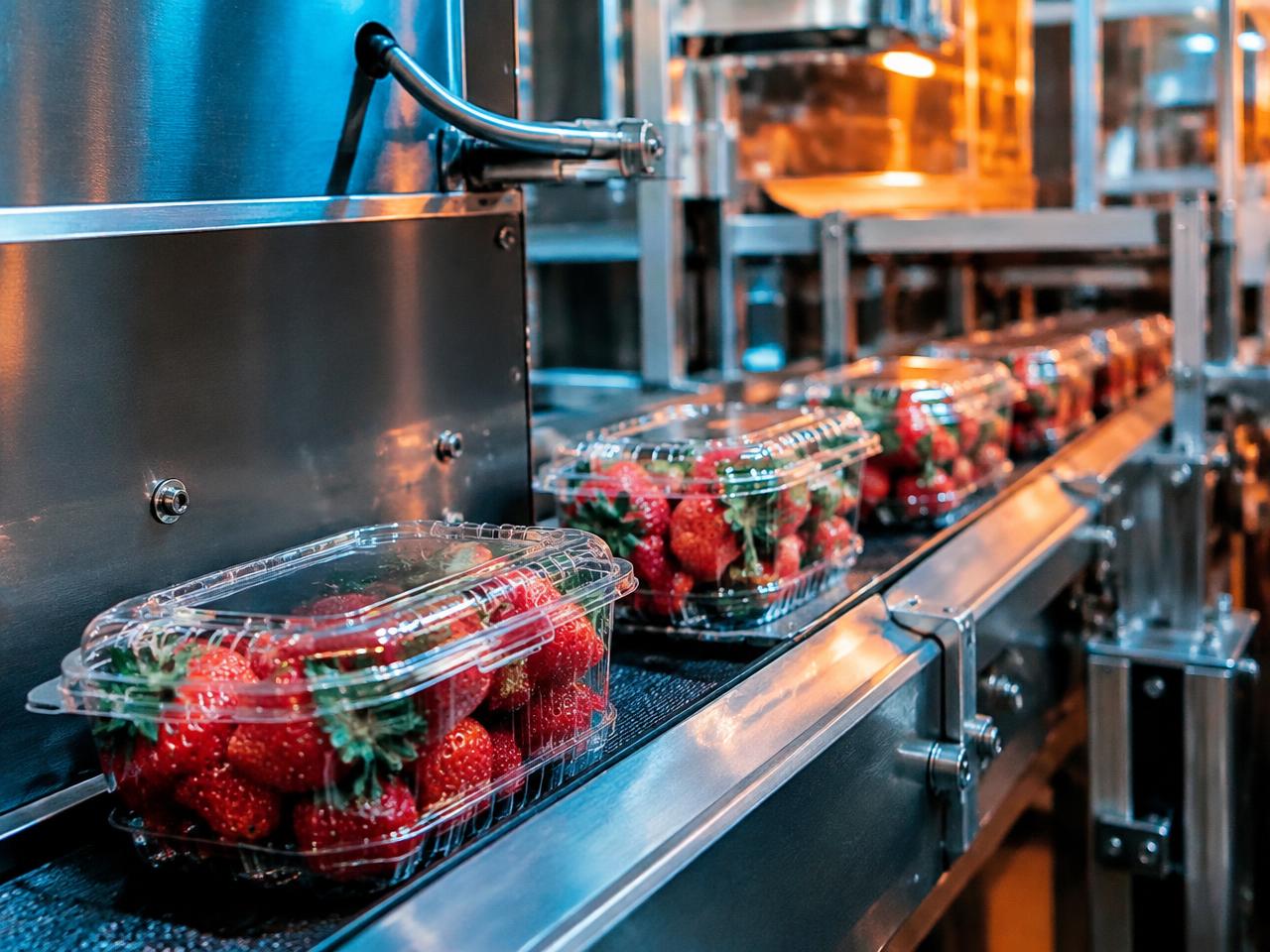
From denesting to palletizing — the five stages of a complete clamshell line and where to start.
Start with the bottleneck
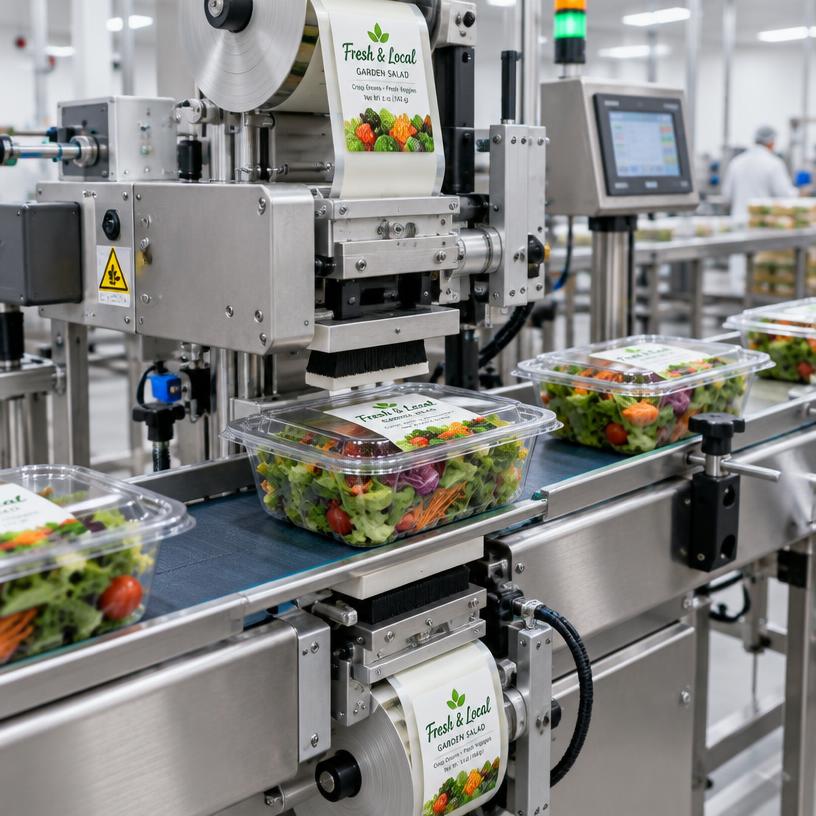
Most packhouses begin automation where labour is hardest to find. For clamshell lines that is usually closing and labeling — tasks that are fast, repetitive and easy to get wrong by hand.
The five stages
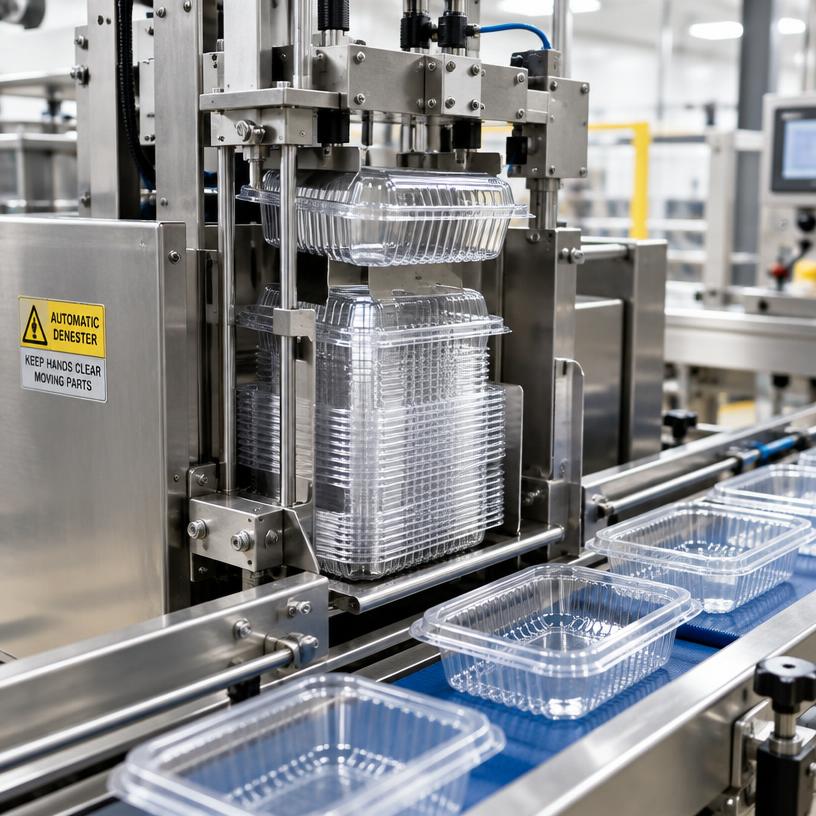
A complete line runs denesting, filling, closing, labeling and end-of-line. Each stage can be automated independently, so you can grow the line in phases.
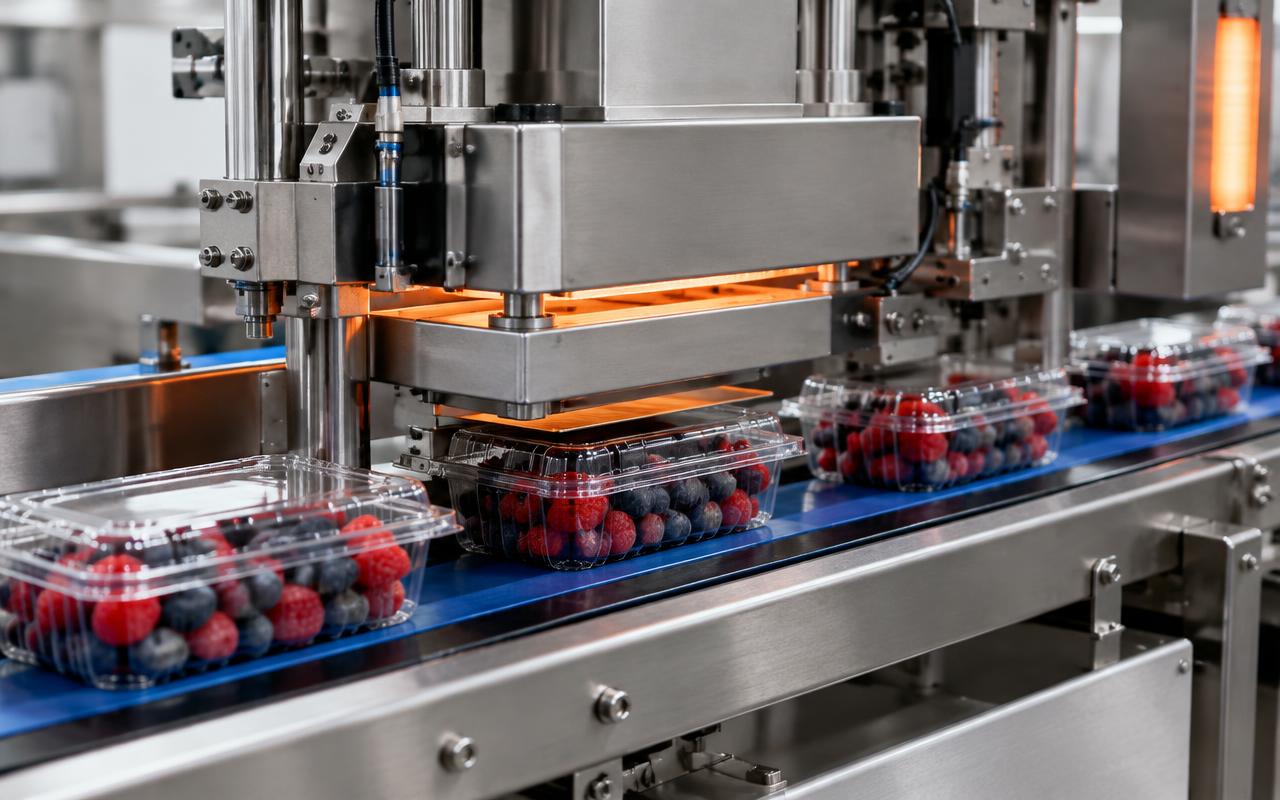
A clamshell closer with a flat-belt infeed is often the easiest first step because it drops in after an existing manual filling table.
Plan the layout
Leave room for accumulation between stations. A short buffer keeps a small stoppage at one machine from stopping the whole line.
Work with integrators
For full turnkey projects, integrators such as Pure Packaging Solutions can combine conveyors, fillers and closers into one line.
Explore the machines
- Clamshell Denester — Separates nested clamshells and places them on the line.
- Clamshell Filling Systems — Accurate weighing and filling of fresh product.
- Clamshell Closer — Closes and locks hinged clamshell lids automatically.
- Clamshell Labeler — Top, bottom and wrap labeling with print-and-apply options.
- End-of-Line Systems — Case packing, case sealing and palletizing.