CLAMSHELL DENESTER
The first station of any automated clamshell line. A denester takes a stack of nested, empty clamshells and places them one by one onto the conveyor — open, square and correctly spaced for filling.
Request a Quote →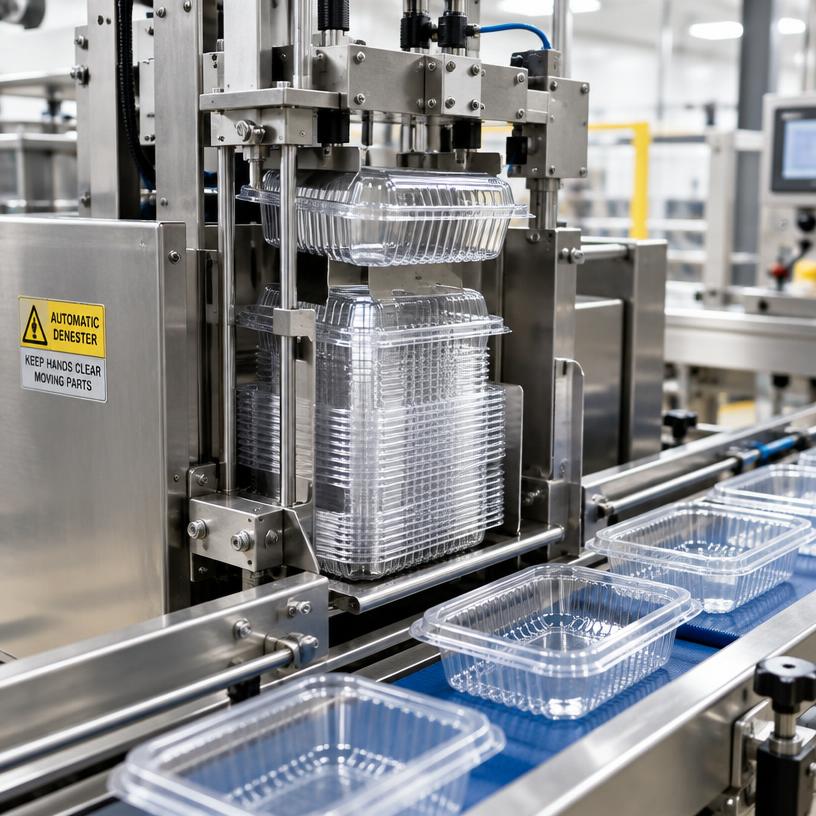
- Speed
- Up to 100 / min
- Lanes
- 1 or 2
- Changeover
- Tool-less
- Construction
- Stainless steel
Key Features
- Handles hinged PET, rPET and PLA clamshells
- Magazine holds several hundred containers for long unattended runs
- Servo or pneumatic pick with vacuum cups
- Tool-less guide adjustment for size changes
- Low-level magazine alarm and missing-container detection
- Single or dual lane configurations
Why automate denesting?
Hand-placing clamshells is repetitive and one of the first jobs to slow a line down. A denester keeps a steady feed so the filler and closer downstream always run at their rated speed.
Integration
Denesters sit at the head of the line and feed directly onto the filling conveyor. Speed is matched to the filler so containers arrive exactly when needed.
Watch It Run
Frequently Asked Questions
Can one denester run different clamshell sizes?
Yes. Guides and cup positions adjust by hand, so switching between common sizes takes minutes.
What happens when the magazine runs low?
A sensor warns the operator before the stack runs out so the line keeps moving.
Tell Us About Your Line.
Share your product, clamshell style and target speed. We'll map the stages and scope a build.
Request a Consultation