Tamper-Evident Clamshells: How Closers Verify the Lock
Sep 23, 2026
Learn how clamshell locks engage, what closing machines can verify, and how to build practical checks for tamper-evident produce and bakery packs.
A closed lid is not always a locked lid
A clamshell can look closed from three feet away and still have one corner sitting above its latch. Put that package through case packing, truck vibration, and a store display, and the problem becomes obvious. The lid lifts, product spills, or a customer questions whether someone opened it.
Tamper-evident packaging adds another requirement. The package must close correctly while preserving the feature that makes prior opening visible. A closing machine can help control that process, but applying pressure is not the same as verifying a lock. Verification requires a defined acceptance standard and a way to detect packages that miss it.
What makes a clamshell tamper-evident?
A conventional hinged clamshell typically uses molded tabs, channels, or perimeter snaps to retain its lid. A tamper-evident design adds a feature intended to show that the package has been opened. Depending on the container, that may be a tear strip, breakaway tab, frangible bridge, or another opening feature.
Tamper-evident does not mean tamper-proof. It means the package provides evidence of opening when used as designed. Nor does a snapped lid establish a hermetic seal or validate food safety. Those are separate questions with separate requirements.
Before setting up equipment, get the container supplier's closing and opening instructions. Identify which features retain the lid, which features indicate opening, and what an acceptable unopened package looks like. Do not assume every tamper-evident design works the same way.
How the machine engages the lock
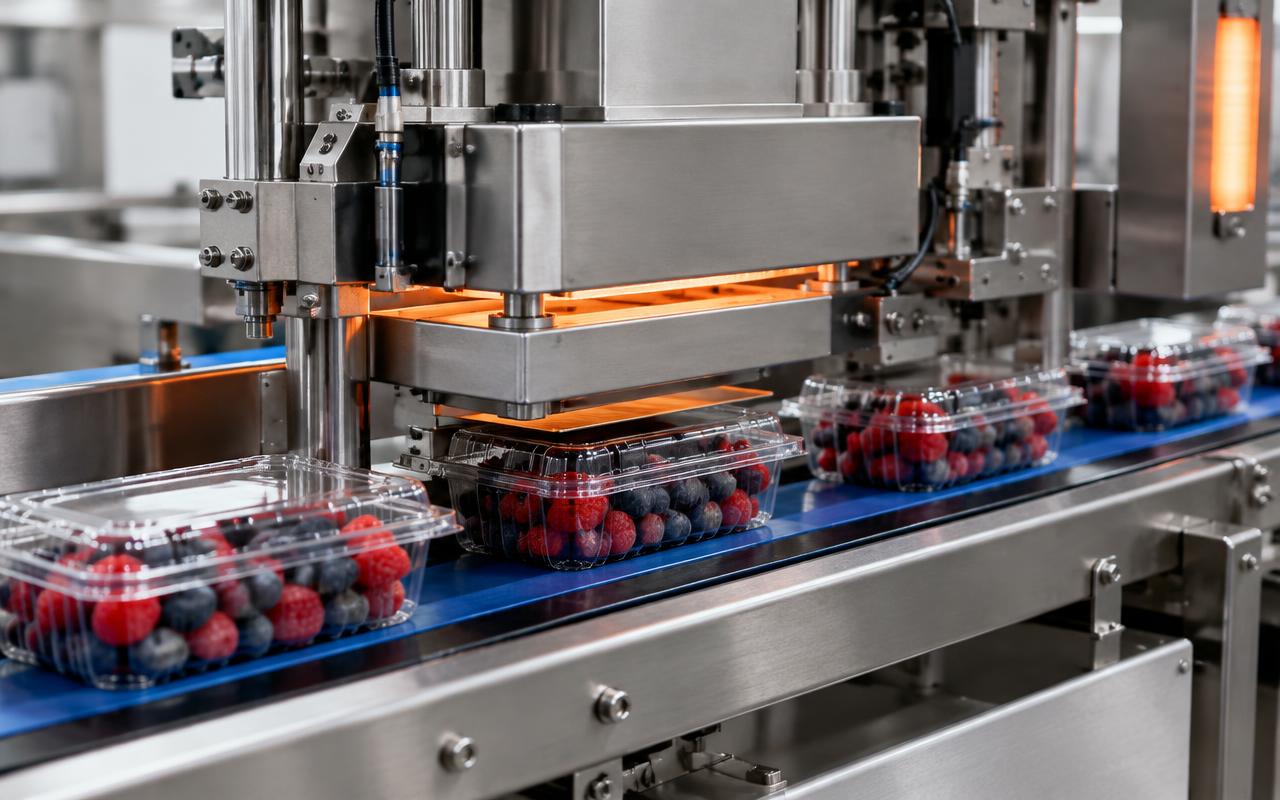
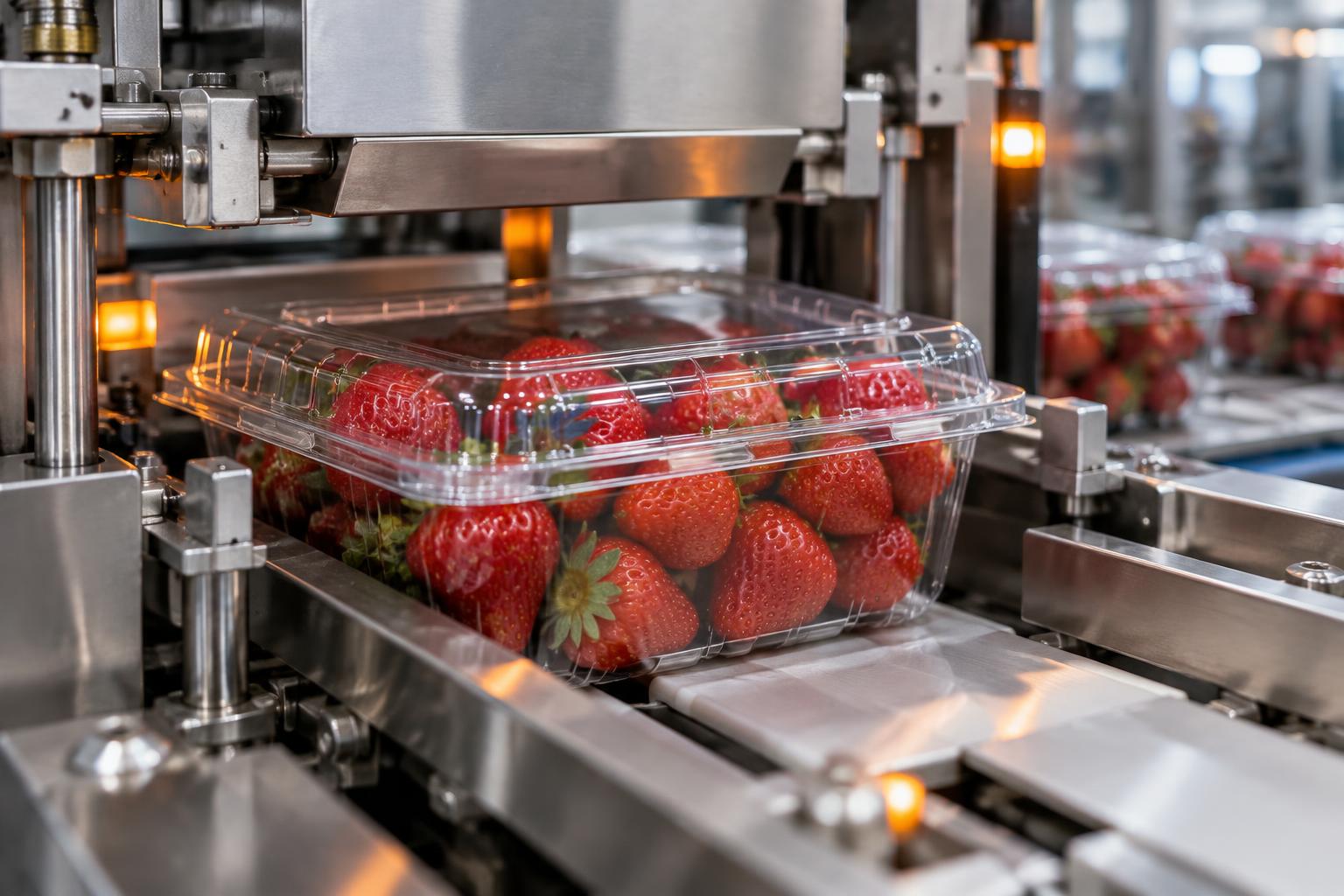
Automatic closing generally involves controlling the container base, guiding the hinged lid into position, aligning mating features, and applying pressure where the design needs it. Guides, belts, rollers, or other tooling may perform these tasks, depending on the equipment.
The base needs support. Otherwise, closing pressure can flex the container rather than engage the latch. The lid also needs alignment before final compression. More force will not reliably fix a lid that approaches its locking channel crooked.
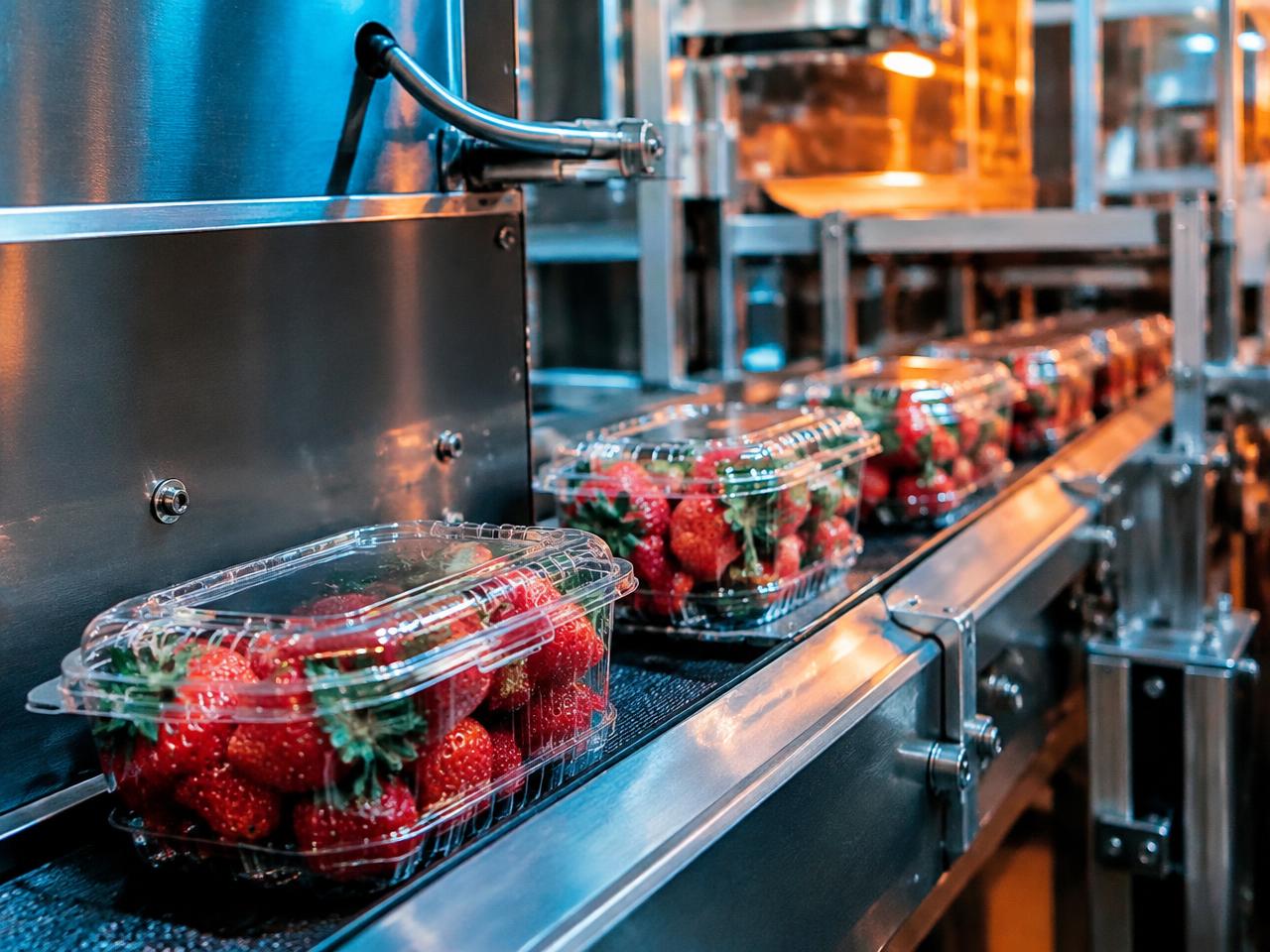
The clamshell closing machine closes and locks 8-64 oz tamper-evident hinged containers automatically at up to 80 containers per minute. For any proposed application, confirm container compatibility, tooling requirements, and available inspection functions with the equipment supplier. A closing capability statement does not, by itself, establish that every latch receives electronic verification.
What counts as lock verification?
There are three different things people sometimes call verification: confirming that the machine completed its motion, inspecting the resulting package, and physically testing closure retention. They are not interchangeable.
1. Confirming the closing operation
A sensor may confirm that a container reached the closing station or that an actuator reached its commanded position. That is useful machine feedback. It does not necessarily prove that the plastic locking features engaged.
Consider a blueberry caught in the latch channel. The mechanism may complete its travel while the lid remains locally raised. A machine-cycle signal alone could miss that defect.
2. Inspecting the closed package
Where fitted, optical sensors or vision systems can inspect visible conditions such as lid height, corner position, closure gaps, and the presence or condition of an opening feature. Inspection must target the actual failure mode. Looking only at the center of a lid may miss an unlatched front corner.
Clear plastic complicates this work. Reflections, molded ribs, condensation, and product behind the latch can change the image. Lighting and camera angle matter as much as the software. Test with normal production variation, not just clean, empty containers.
A visual pass means the measured features met their limits. It is not automatically proof of mechanical retention. Establish that relationship through testing.
3. Checking retention and opening behavior
A manual or engineered mechanical check can test whether a lid resists a defined opening action. An opening test can also establish whether the tamper-evident feature breaks or changes as intended. Some tests alter the package, making them suitable for sampled checks rather than saleable production.
I would start with the container supplier's test method, not an arbitrary pull force. An overly aggressive test can damage a good closure; a weak test can accept a bad one.
Build an acceptance standard operators can use
Replace “looks shut” with specific observations. Keep approved samples or clear photographs at the line. Include defects, too. Operators need to recognize the difference between a normal molded seam and a gap caused by an unseated latch.
- Alignment: The lid and base sit in their intended positions without skew.
- Engagement: Required locking points meet the supplier's acceptance criteria.
- Clearance: No product, crumbs, or foreign material obstructs the closing features.
- Integrity: Tear strips, tabs, and bridges remain intact before consumer opening.
- Opening behavior: Sampled packages show the intended evidence when opened according to instructions.
For example, on a muffin line, a paper liner folded across the rim can interfere with engagement. On a berry line, an overfilled container can push upward against the lid. Neither problem should be treated simply by increasing closing pressure.
Challenge the inspection and reject system
If a line includes automatic inspection, demonstrate what it catches. Use controlled challenge packages representing agreed defects: an unlatched corner, an obstructed rim, a skewed lid, and a damaged tamper feature. Clearly identify and account for every challenge package so none reaches saleable cases.
Check performance under intended running conditions. A detector that works during slow setup may behave differently with production spacing, vibration, or changing reflections. Record both missed defects and false rejects.
Detection also needs a response. Confirm that the correct container is rejected, that it reaches the reject location, and that operators receive appropriate alarms when rejection cannot occur. Inspection without reliable containment leaves the original risk in place.
Keep upstream and downstream conditions in the picture
Closure quality starts before the closer. Consistent container presentation and controlled fill placement reduce interference at the rim. Where filling is a recurring source of defects, review the application with the supplier of your Clamshell Filling Systems rather than asking the closer to compensate.
For broader line-integration discussions, Packaging Machine is another supplier resource. Specify container samples, expected defects, inspection needs, and reject handling before requesting a configuration.
Finally, check packages after labeling and case packing as well as directly after closing. Start-up, changeovers, container-lot changes, and adjustments all deserve renewed checks. The practical goal is simple: engage the lock, preserve the tamper evidence, and prove that your checks can distinguish acceptable packages from the defects your line actually produces.
Explore the machines
- Clamshell Denester — Separates nested clamshells and places them on the line.
- Clamshell Filling Systems — Accurate weighing and filling of fresh product.
- Clamshell Closer — Closes and locks hinged clamshell lids automatically.
- Clamshell Labeler — Top, bottom and wrap labeling with print-and-apply options.
- End-of-Line Systems — Case packing, case sealing and palletizing.