Strawberry Packaging Machine: Gentle Handling to the Clamshell
Oct 7, 2026
Reduce strawberry bruising with practical guidance on receiving, feeding, weighing, clamshell filling, closing, and cooling.
Start with the berry, not the speed rating
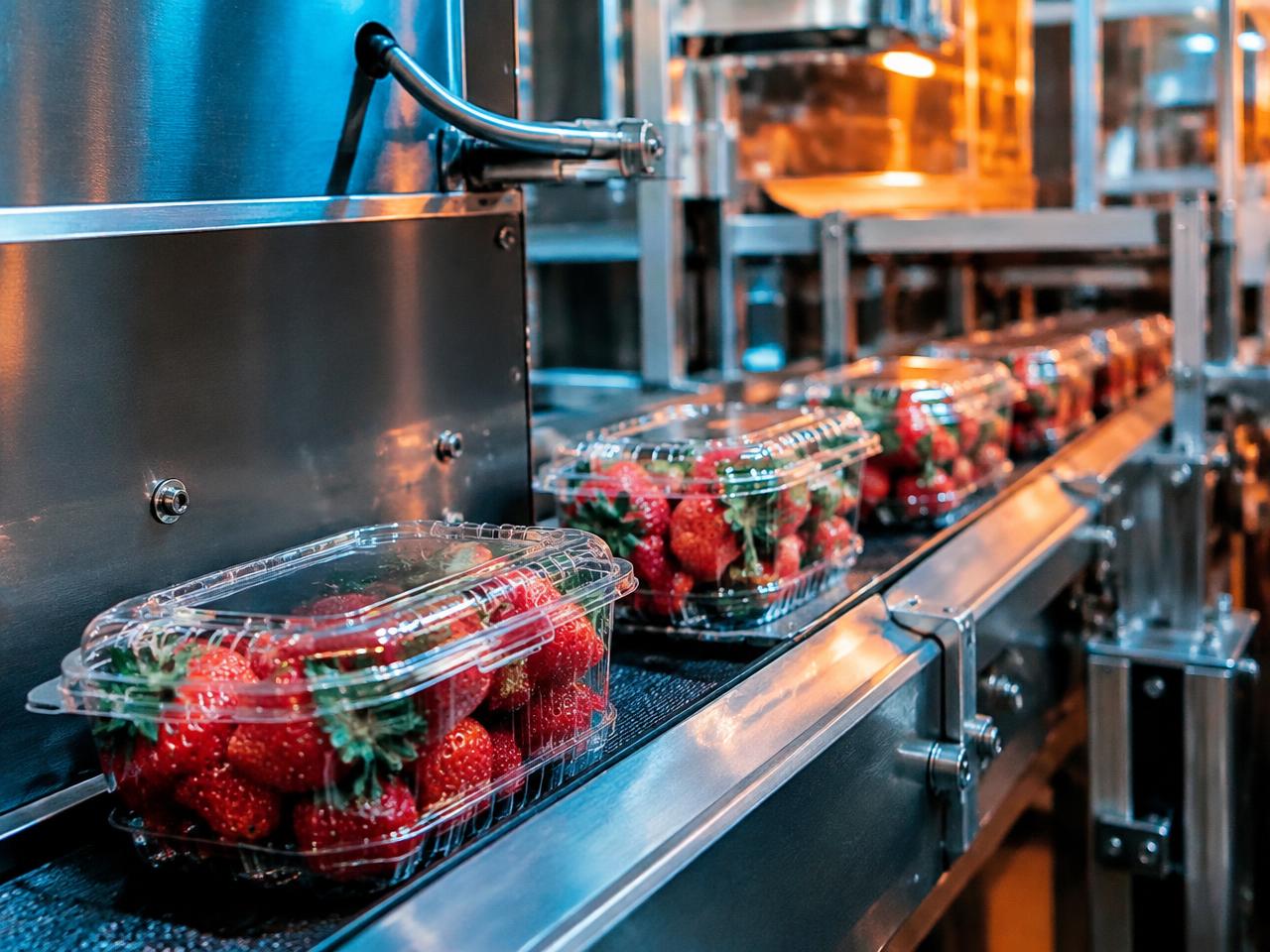
A strawberry packaging machine should move fruit without turning a good harvest into tomorrow's shrink. That takes more than a soft conveyor belt. Every transfer, accumulation point, weighing cycle, and lid closure can add damage that is hard to see when the package leaves the line.
First, establish how the fruit reaches the packing operation. Many fresh-market strawberries are field-packed directly into retail clamshells, reducing later handling. A centralized filling line receives loose fruit and adds transfers. Those are different applications. Field-packed fruit may need inspection, closing, and labeling, not another trip through a filler.
For loose fruit, the goal is straightforward: weigh accurately, fill gently, and get the package into the cooling process without unnecessary delay.
Protect quality before fruit reaches the hopper
No machine can correct overripe berries, deep harvest containers, or pallets left warm while operators clear a downstream stoppage. Define incoming fruit conditions before discussing equipment settings.
Check pulp temperature, firmness, decay, leaking juice, and harvest debris. Sample containers from different pallet positions rather than inspecting only the easiest tray to reach. Keep lot identity through packing so a quality problem can be traced to its source.
Strawberries are generally stored close to 32°F at 90% to 95% relative humidity. Actual receiving temperatures and cooling procedures depend on the operation. Work with the food safety and postharvest teams to avoid freezing, condensation problems, and prolonged warm holding.
I would put a clock on receiving delays before buying more conveyor. A faster filler does little good if harvested fruit waits beside it because the cooler is full.
Design transfers around impact and compression
Look at the complete fruit path: harvest container to receiving belt, belt to inspection area, inspection to weighing, and weighing to clamshell. Count each transfer. Then measure its vertical drop and observe where berries land.
A 4-inch drop onto a hard edge is not equivalent to a 1-inch transfer onto a moving, cushioned surface. Neither measurement is a universal acceptance limit. Variety, ripeness, berry size, landing surface, and repeated impacts all affect damage.
- Match belt speeds: A large speed difference can make fruit tumble, slide, or pile up.
- Control bed depth: Deep accumulation puts pressure on the bottom berries and makes inspection harder.
- Remove catch points: Check side guides, belt transitions, fasteners, and chute seams for snagging or abrasion.
- Use cleanable cushioning: A soft material is not useful if it absorbs juice or cannot withstand the required cleaning process.
Watch a stop and restart, not just steady production. A line that treats fruit gently while running can still crush berries when an upstream belt keeps feeding a stopped discharge.
Feed the scale without squeezing the fruit
Accurate filling begins with consistent presentation to the weighing system. Surges force the equipment to handle too much fruit at once, while starvation produces irregular cycles and tempts operators to increase feed intensity.
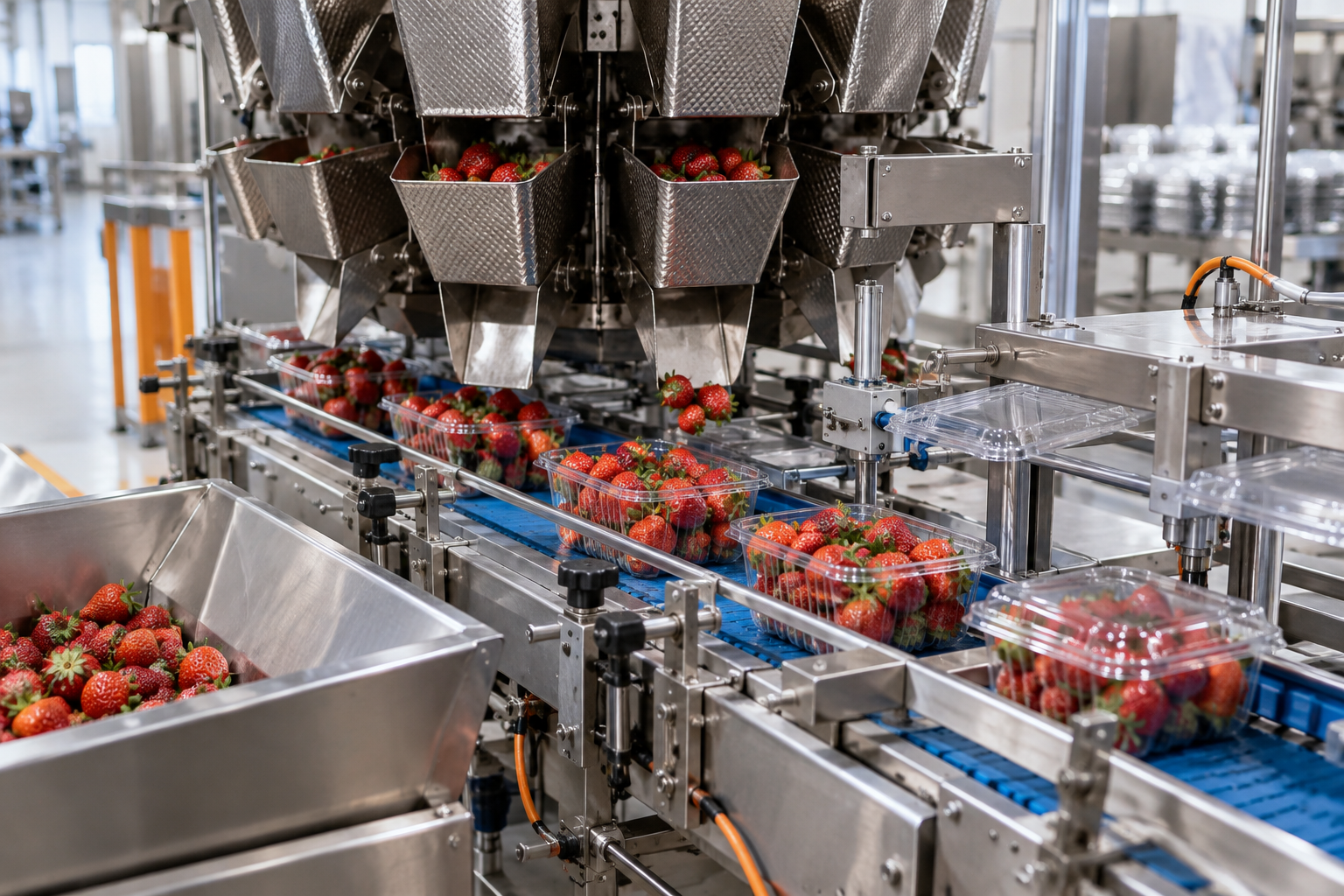
Evaluate clamshell filling systems with your actual strawberries. Include large berries, small berries, and softer fruit within your acceptable incoming specification. A demonstration using firm, uniform fruit does not establish performance across your harvest season.
Ask how the system meters fruit, releases a weighed portion, and limits the drop into the container. Aggressive vibration, narrow gates, and abrupt discharge can be poor matches for tender berries. The correct arrangement depends on the product and requires testing.
For a 1-pound pack, weight control is also constrained by individual berry size. If one berry weighs about 1 ounce, adding it changes package weight substantially. Check average giveaway, underweight frequency, and manual correction together. Good scale resolution alone does not guarantee economical packs.
Make the clamshell part of the machine trial
Container geometry influences both filling and closing. Test the exact clamshell, including its lid hinge, latch design, vent pattern, and production variation. Nominal package capacity is not enough to specify handling equipment.
Empty containers must separate reliably and arrive squarely beneath the discharge. A tilted clamshell can catch fruit on its rim. A double-fed container can cause a jam that backs fruit up through several stations.
During filling, watch for berries bridging across the opening or standing above the rim. Do not use the lid to push an overfilled pack into shape. Correct the fill presentation, container selection, or fruit arrangement instead.
Keep spare containers from several manufacturing lots for acceptance testing. Small dimensional differences may reveal problems that a single carefully selected stack misses.
Close lids without trapping berries or leaves
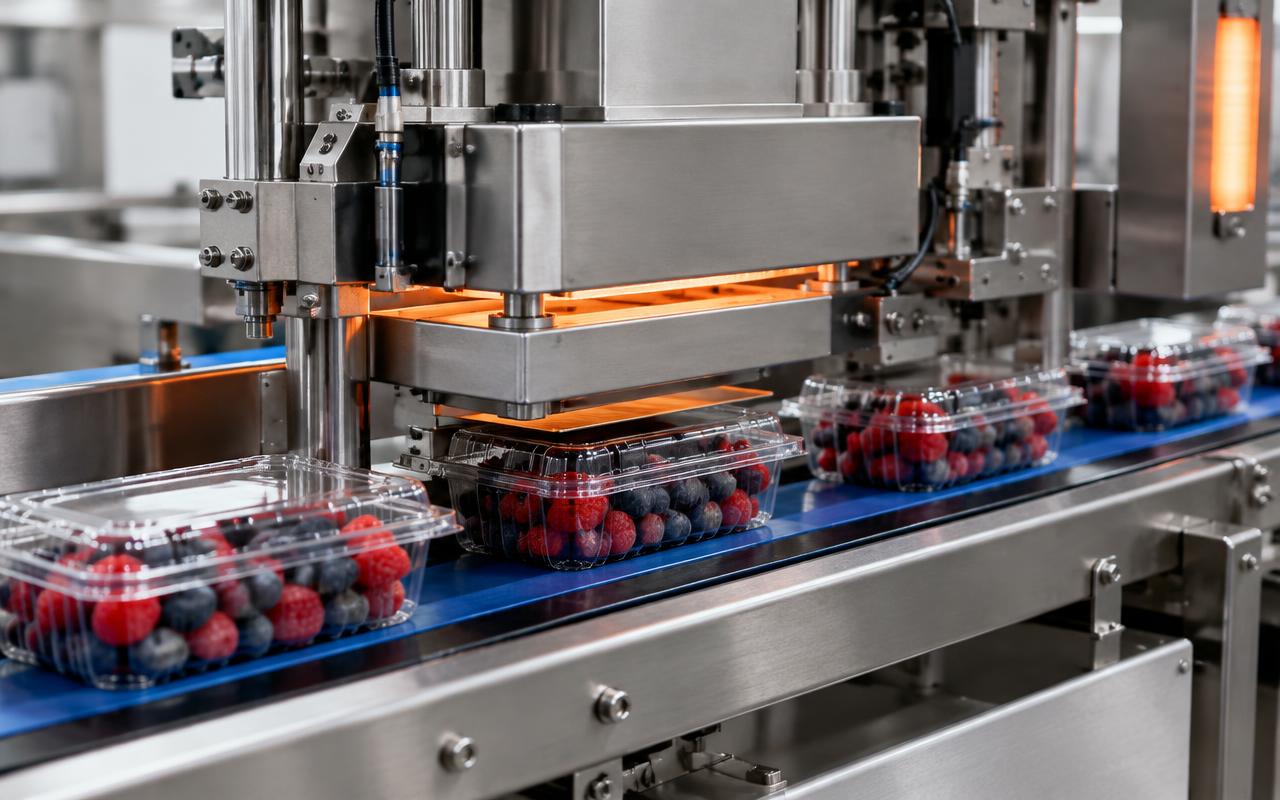
The closing station should receive aligned containers with clear latch areas. A berry shoulder, leaf, or stem across the rim can prevent full engagement. Extra closing pressure is not the right fix for fruit trapped in the closure.
Our clamshell closing machine handles 8-64 oz tamper-evident hinged containers at up to 80 containers per minute. Treat that as an equipment capability, not a guaranteed strawberry line output. Actual production depends on the container, filling consistency, upstream supply, and downstream capacity.
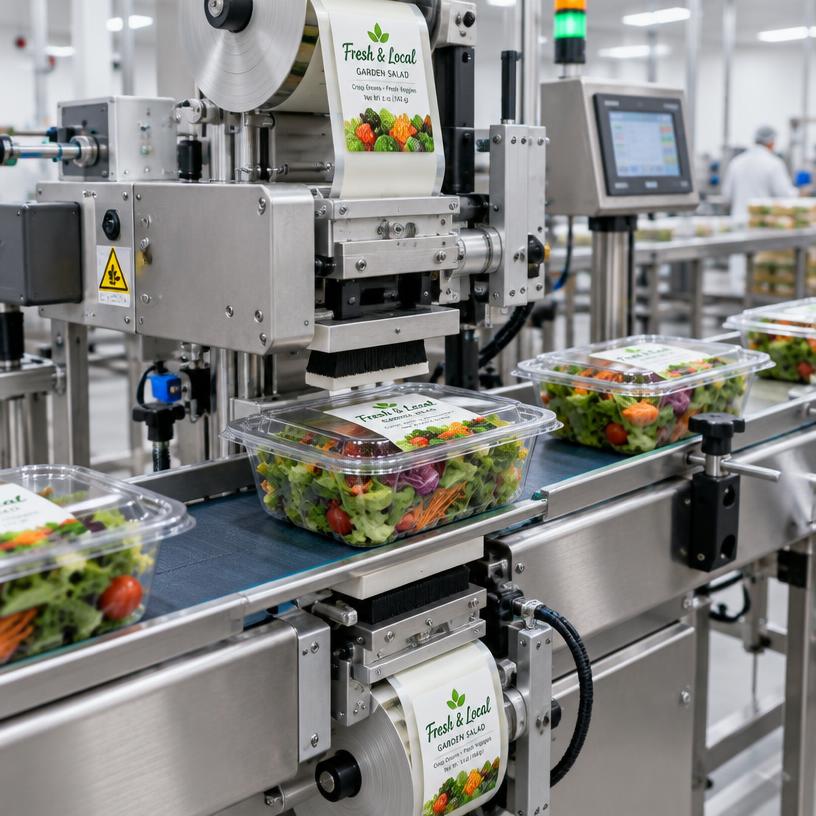
Inspect latch engagement and package condition after closing. Check that tamper-evident features remain intact and that lids stay secured during normal case handling. Labels should not unintentionally obstruct ventilation openings needed by the cooling arrangement.
Measure saleable output and delayed damage
Run acceptance trials long enough to include replenishment, brief interruptions, and normal operator intervention. Record accepted packs per minute rather than counting every container that passes a sensor.
Keep a hand-packed control from the same fruit lot. Compare it with machine-packed samples immediately and after representative refrigerated holding. Bruising and juice leakage may become more apparent later. Use the same sampling and scoring method for both groups.
Record giveaway, closure failures, damaged berries, and labor used for correction. Review cleaning access around gates, belt returns, and juice collection areas. When coordinating conveyors and downstream equipment, Packaging Machine is another equipment resource to consult. Specify interfaces and stop signals explicitly.
Questions and Answers
Should field-packed strawberries pass through a filling machine?
Usually not. If retail clamshells are already filled correctly, focus on inspection, closing, labeling, and case handling. Emptying and refilling them adds handling without an inherent quality benefit.
What should we change when strawberries catch under the lid?
Check fill height, berry orientation, container alignment, and debris at the rim. Correct those conditions before increasing closing pressure, which can damage trapped fruit or the package.
How do we verify that a gentler transfer actually helps?
Compare matched fruit lots before and after the change, using consistent refrigerated holding and inspection times. Track bruising and leakage against a hand-packed control, not just immediate appearance.
Explore the machines
- Clamshell Denester — Separates nested clamshells and places them on the line.
- Clamshell Filling Systems — Accurate weighing and filling of fresh product.
- Clamshell Closing Machine — Closes and locks hinged clamshell lids automatically.
- Clamshell Labeler — Top, bottom and wrap labeling with print-and-apply options.
- End-of-Line Systems — Case packing, case sealing and palletizing.