Produce Clamshell Packaging: Machines, Materials and Line Layout
Oct 10, 2026
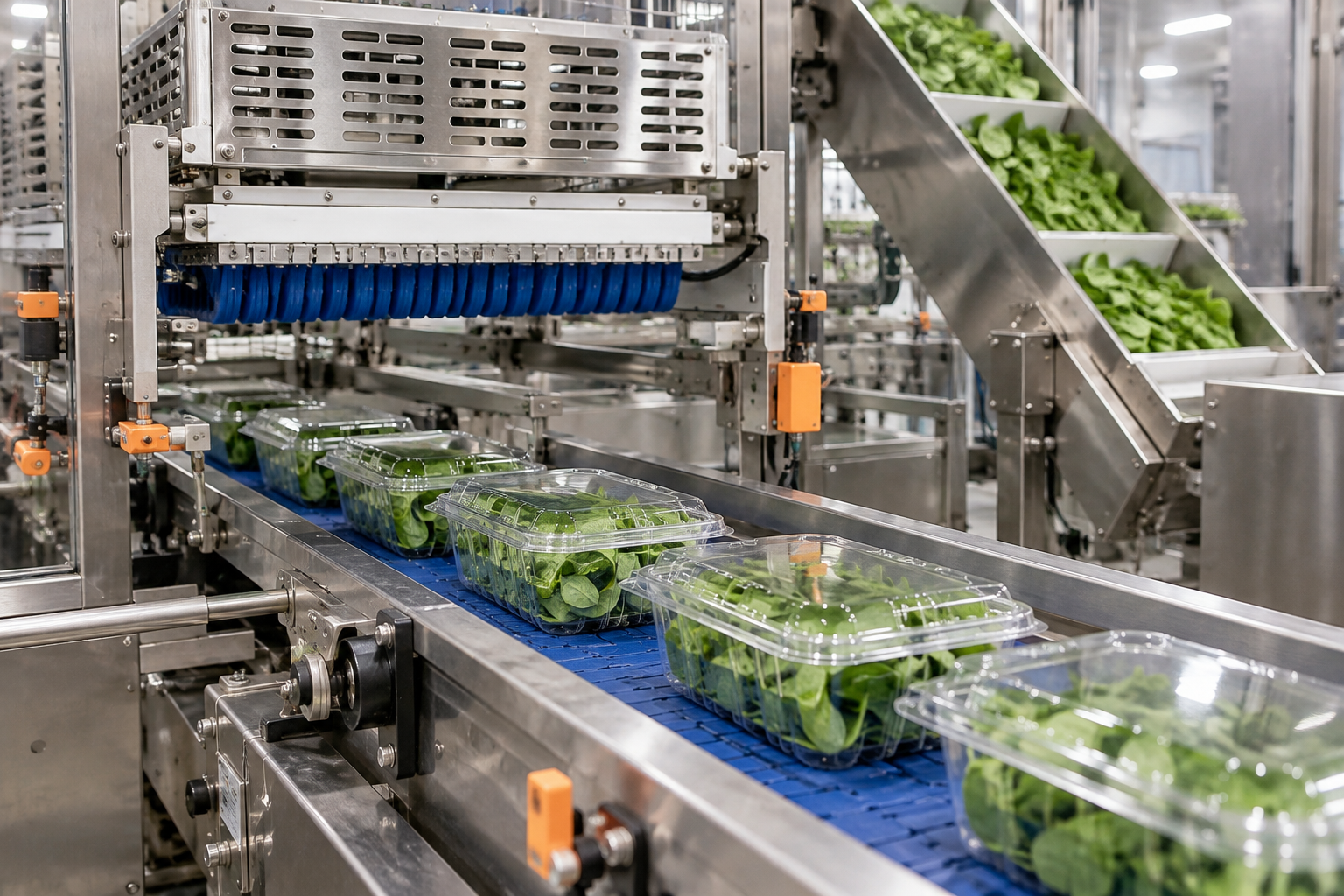
Plan a produce clamshell line around container materials, gentle filling, reliable closing, sanitation access and realistic production targets.
Start with the package, not the equipment list
A produce clamshell line succeeds when the container, product and machinery work together. A lid that closes easily by hand may behave differently after automatic filling. A berry caught on the rim can prevent latching. A stack of empty containers that looks straight on a pallet may separate poorly in a denester.
I start with actual production samples: empty clamshells from several cases, filled packages at normal weight and product representing the difficult end of the crop. Large strawberries, soft raspberries and wet grape clusters expose different problems. Build the equipment specification around those conditions, not just a clean, empty container.
Choose materials with the full process in mind
PET, recycled PET and package consistency
Clear PET is common in produce clamshells because it provides visibility and useful stiffness. Recycled PET can also be used, depending on the container specification and applicable food-contact requirements. Ask the supplier for documentation covering the intended use. Resin identification alone does not establish food-contact suitability or local recyclability.
For automation, the formed package matters as much as the resin. Wall thickness, hinge behavior, flange flatness and stacking features affect handling. A change in recycled content or tooling does not automatically create a problem, but any container specification change deserves a line trial.
Vents, moisture and tamper-evident features
Vent location and open area should match the commodity, cooling method and shipping requirements. More ventilation is not always better. It can support airflow while also increasing moisture loss under some conditions. Have the produce quality team approve the package rather than selecting vents solely for machine convenience.
Check where condensation collects and where the label lands. A wet or ribbed surface can interfere with adhesion. Tamper-evident features need similar attention: the closing process must engage the intended locks without damaging tear strips or other opening indicators. A lid that looks shut is not necessarily secured correctly.
Match each machine to the product and container
Denesting establishes the rhythm
The Clamshell Denester separates nested containers and places them on the line. Its job sounds simple until static, distorted flanges or tightly nested stacks cause doubles and missed placements. Test containers from multiple production lots and check how stack height affects separation.
Give the operator room to load stacks without reaching across moving equipment. Specify how the line detects a missing or doubled container, and what happens next. Stopping a fill before product drops onto an empty belt is usually easier than cleaning up afterward.
Filling requires more than weight accuracy
Fresh product does not flow like uniform hardware. Blueberries roll, leafy greens bridge and grape stems catch. Filling equipment needs to deliver the target weight while controlling drop height, impact and product distribution. A correct weight can still produce an unacceptable pack if fruit is bruised or piled across the closing flange.
Measure giveaway alongside underweight rejects. If a line averages 0.2 ounce above target across 30,000 packs, that is 375 pounds of extra product. That arithmetic does not mean every pack should sit exactly at declared weight. Set targets with the quality team and applicable net-content requirements in mind.
Closing depends on presentation
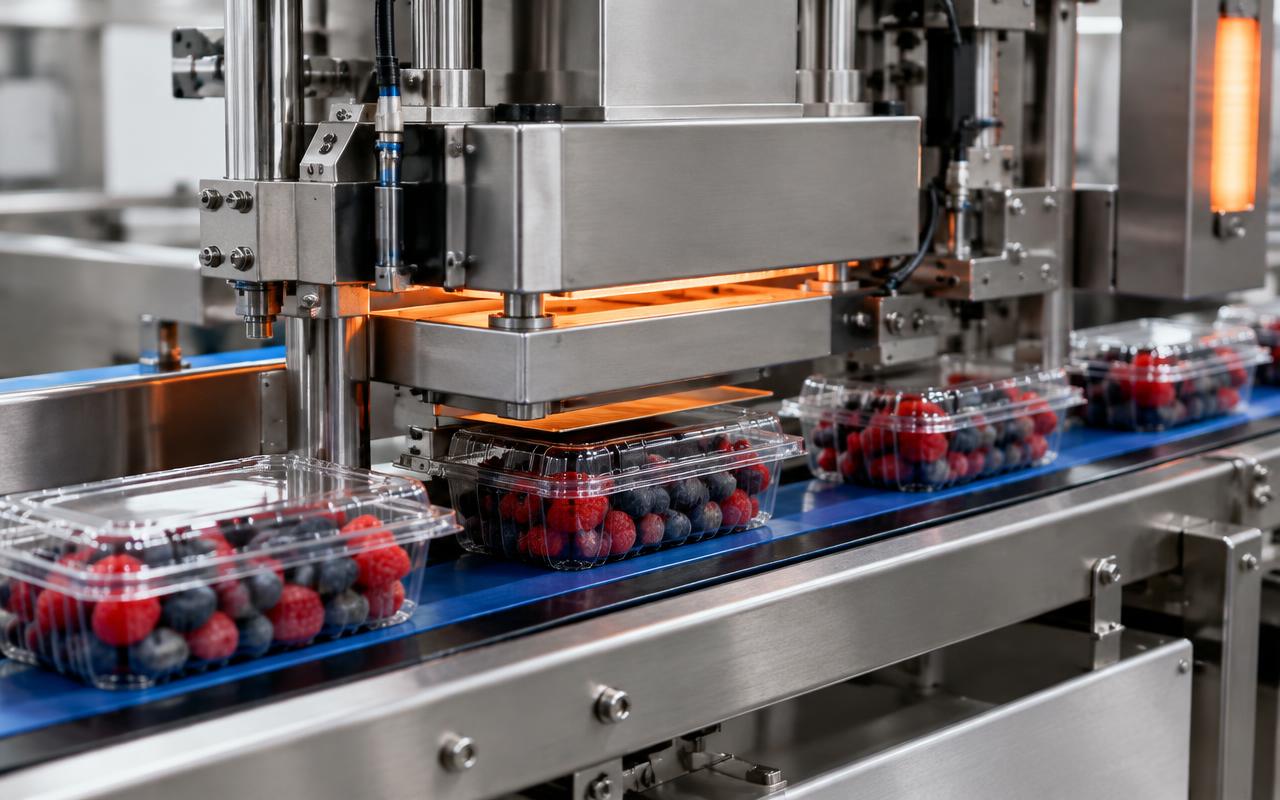
The Clamshell Closing Machine handles 8-64 oz tamper-evident hinged containers at up to 80 containers per minute. Actual output depends on the package, product presentation and connected equipment. Confirm the specific clamshell geometry and latch design during testing.
Before closing, the container should be supported, correctly oriented and clear of product on the sealing rim. Do not use extra closing force as a substitute for fixing overfill or poor alignment. Verify latch engagement on finished samples, including packs taken immediately after restarts and changeovers.
Labeling and case packing complete the system
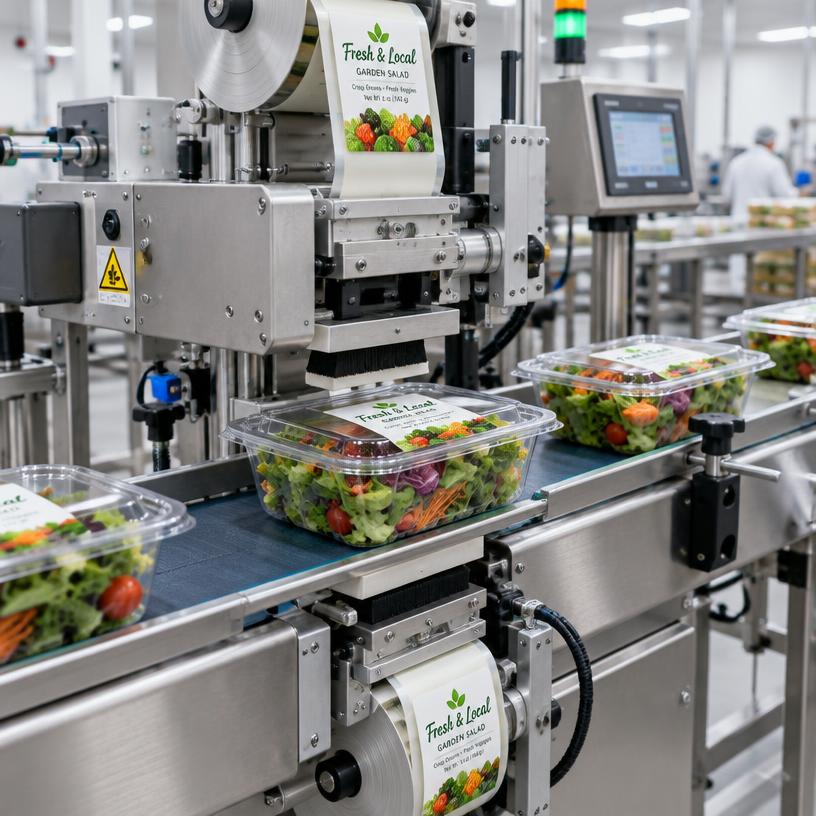
Reserve a consistent label area that does not unintentionally cover required vents or opening features. Decide whether top, bottom or wrap labeling is needed before finalizing conveyor support and transfer points. Print-and-apply systems also need correct data, readable codes and a defined response to print failures.
Case packing must keep pace without crushing the finished package. For broader packaging equipment planning, packagingmachine.com is another resource to consult. Evaluate the downstream system using actual filled clamshells and shipping cases, not dimensions alone.
Lay out the line for access and recovery
Draw the product path first, then add people, empty-container delivery, case replenishment, rejected packs and waste removal. A straight line is often convenient, but it is not automatically the best fit. A layout that saves conveyor length can still create constant forklift and operator conflicts.
- Provide service clearance: Include open guard doors, electrical-panel access and space to remove belts or tooling. Follow manufacturer instructions and applicable access requirements.
- Separate traffic: Avoid routing pallet movement through stations where operators inspect or replenish packages.
- Make sanitation practical: Leave access beneath conveyors and around supports. Match equipment construction and cleaning methods to the sanitation program.
- Plan reject handling: Keep rejected packs accessible without sending employees into guarded areas.
Use accumulation deliberately. At a planning rate of 60 containers per minute, 30 seconds of buffering holds 30 containers. With a 10-inch conveyor pitch, that requires about 25 feet of usable single-lane storage. Transfers and unusable sections add length. Buffering can absorb a short interruption; it cannot fix a machine that consistently runs too slowly.
Specify an acceptance test before ordering
Define saleable output, not just machine cycles. Include sustained running, replenishment, short stops, restarts and changeovers. Record denesting faults, weight results, rim contamination, incomplete closures, label rejects and product damage.
Require trials with representative product and all planned container sizes. Agree on the test duration, staffing and acceptable results before purchase. I would rather find a difficult latch or unstable transfer during a controlled trial than during the first heavy harvest week.
Questions and Answers
Can two clamshells with the same labeled capacity use the same setup?
Not necessarily. Flange dimensions, hinge location, stack spacing and latch geometry may differ. Compare drawings and test both containers before assuming existing tooling and settings will work.
Where should accumulation go on a produce clamshell line?
Place it where a brief stop would otherwise interrupt upstream production, often before labeling or case packing. Closed packs are generally easier to buffer than open, filled containers. Check stability and pressure limits first.
What should operators check when lids stop latching?
Check for product on the rim, excessive fill height, damaged containers and incorrect alignment. Follow safe stop and isolation procedures before accessing machinery. Verify the approved setup before changing closing force.
Explore the machines
- Clamshell Denester — Separates nested clamshells and places them on the line.
- Clamshell Filling Systems — Accurate weighing and filling of fresh product.
- Clamshell Closing Machine — Closes and locks hinged clamshell lids automatically.
- Clamshell Labeler — Top, bottom and wrap labeling with print-and-apply options.
- End-of-Line Systems — Case packing, case sealing and palletizing.