Print-and-Apply Labels for Produce Traceability on Clamshells
Nov 13, 2026
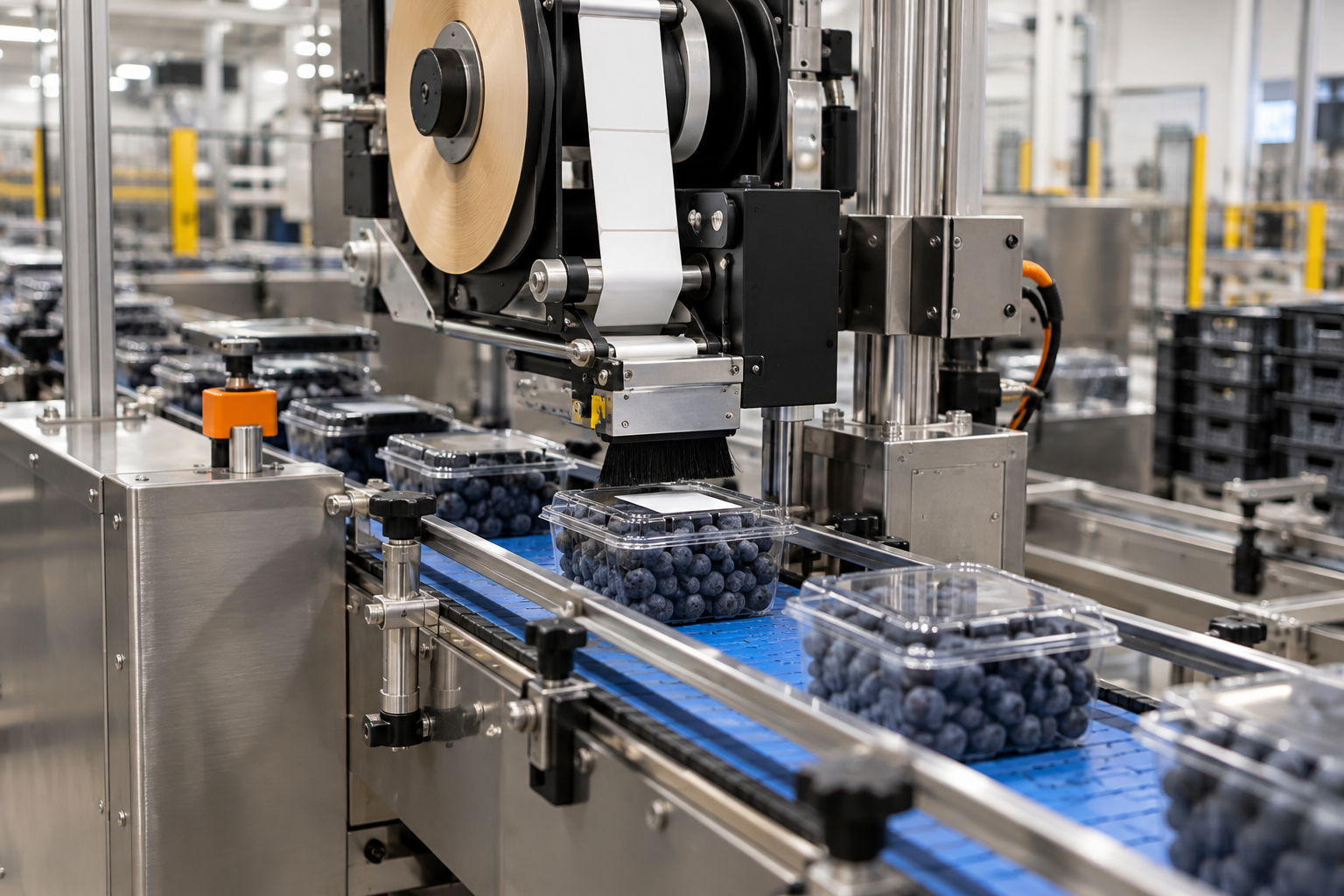
Plan clamshell print-and-apply labeling around PTI case identification, lot control, barcode readability, placement, and reliable exception handling.
Start with the case-to-clamshell relationship
Print-and-apply labeling puts variable product information onto a package as it moves through production. For produce clamshells, that information can help connect a retail package to a packing lot. But a readable clamshell label does not, by itself, establish Produce Traceability Initiative (PTI) compliance.
PTI focuses on standardized identification and traceability at the case level. A retail clamshell label and an outer-case PTI label serve different purposes. Before selecting equipment, establish what belongs on each packaging level, what your buyers require, and how your records connect those levels.
The practical goal is straightforward: the product, printed information, barcode data, and production record must agree. A fast applicator cannot compensate for an incorrect lot assignment.
Define the data before choosing the printer
Create an approved label specification for each product and packaging level. Include the human-readable text, barcode format, encoded fields, and placement requirements. Have the person responsible for customer labeling requirements approve it before production.
- Product identity: Distinguish the retail selling unit from the shipping case. Do not assume they use the same Global Trade Item Number (GTIN).
- Lot or batch: Define how the identifier is assigned and what production records it references.
- Date fields: Identify exactly what each date means. A pack date and a best-by date are not interchangeable.
- Customer-specific content: Document any required text, barcode structure, or label location separately from internal preferences.
For PTI case labeling, confirm the applicable GTIN, lot information, barcode requirements, and any buyer-required additions against current program and customer specifications. Do not copy a case barcode onto a clamshell simply because it fits.
A QR code linking to a consumer information page may be useful, but it should not be assumed to replace a required traceability barcode. Likewise, a retail checkout barcode should not be assumed to carry the lot information needed for your traceability process.
Control where variable information comes from
Decide which system owns product identity, lot assignment, and label templates. That might be production software or a controlled local database. The important point is to avoid competing sources that allow the same product to receive different identifiers.
At changeover, select the approved product record rather than asking an operator to retype every field. Restrict template editing, validate required fields, and define who can release a revised label. Where manual entry remains necessary, require a documented check against the production order.
Also define what happens at a lot boundary. Product already on the conveyor, labels waiting in the print queue, and partly packed cases can all belong to the previous lot. A controlled stop and documented clearance may be preferable to changing data while unidentified work remains in motion.
Choose label placement around the actual clamshell
Start with a flat, supported label area. Hinges, ribs, lid recesses, and latch features can interfere with application or distort the barcode. A location that looks attractive on an empty container may behave differently after filling and closing.
Test the smallest and largest intended clamshells with representative product inside. Check that the label does not obstruct the closure, cover information that must remain visible, or bridge a surface that flexes during handling. If a label crosses the lid edge, define whether it has a tamper-indicating role and test that function separately.
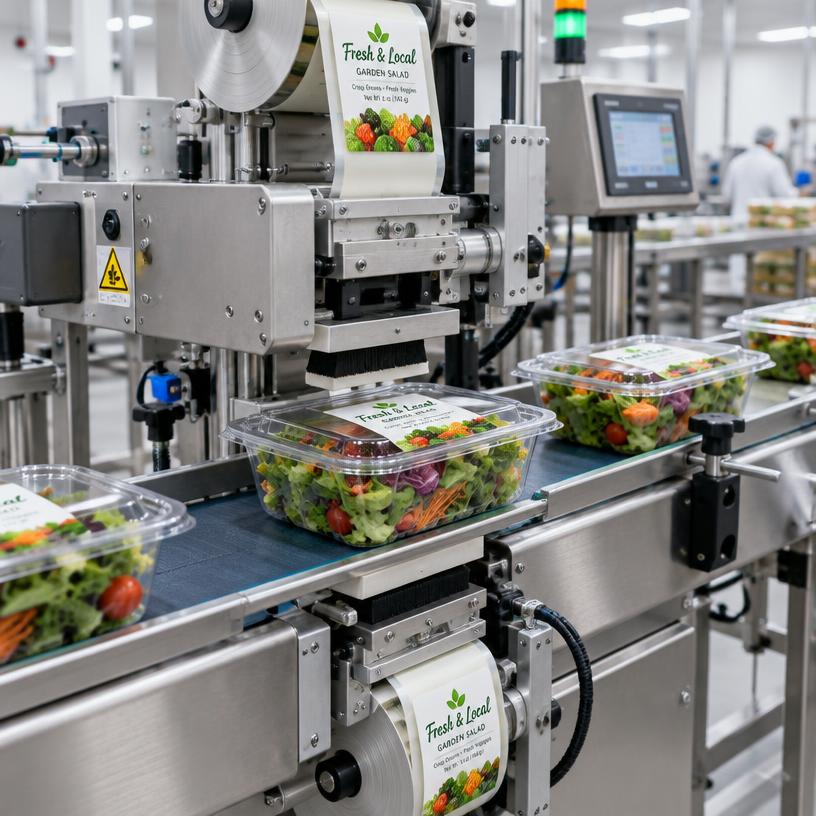
The Clamshell Labeler is the relevant starting point for discussing top, bottom, or wrap placement and print-and-apply options. Specify the location you need rather than treating those arrangements as interchangeable.
Leave room for the barcode's required clear margins. Making a label smaller by crowding text against the symbol can undermine readability even when the printed bars look sharp.
Test materials under packing and storage conditions
Produce packaging may encounter cold surfaces, moisture, refrigeration, and repeated handling. Ask the label supplier to recommend a facestock and adhesive for the actual container material, application temperature, and storage conditions. Adhesion at application and adhesion after storage are separate checks.
Evaluate direct thermal and thermal transfer printing against the expected label life and exposure conditions. For thermal transfer, test the ribbon and label stock together. For either method, confirm that text and barcode contrast remain acceptable throughout the intended distribution period.
Use filled packages during trials. Inspect for lifting edges, wrinkling, scuffing, and obscured codes after normal handling and refrigerated storage. Record the tested materials and conditions so a purchasing substitution does not silently change label performance.
Match application to the closing and conveying process
Labeling after closing can provide a more consistent presentation, provided the lid is fully seated and the conveyor controls package position. Compare application methods using your actual containers, label dimensions, conveyor spacing, and required rate.
For reference, the Clamshell Closing Machine handles 8-64 oz tamper-evident hinged containers at up to 80 containers per minute, according to the But-N-Loc equipment specification. Actual output depends on the container and line conditions. That closer specification is not a print-and-apply throughput guarantee.
For broader line planning, review the integration options with Pure Packaging Solutions. Ask the supplier to evaluate printing, application, inspection, and rejected-package handling together. Buying each station against an isolated maximum rate can leave the assembled line constrained by package spacing or inspection time.
Inspect both readability and correctness
A scanner reading a barcode successfully does not prove that the label belongs on that package. Separate the checks for label presence, readable data, correct product and lot, and acceptable print quality.
Define the response to each failure before startup. A missing label, unreadable symbol, wrong lot, or failed reject confirmation should trigger a controlled action. Rejected packages need a designated holding location and a rework procedure that prevents duplicate or conflicting labels.
At startup and changeover, compare a printed sample with the approved production record. During operation, check placement and adhesion as well as data. Keep a record of label changes and exceptions, and periodically test whether a finished clamshell can be connected through its lot records to the cases packed from that run.
Questions and Answers
Does every clamshell need the outer-case PTI barcode?
No. PTI case identification and retail-unit labeling are different requirements. Confirm the clamshell's required content with your buyer and traceability team rather than duplicating the case label.
What should happen to queued labels during a lot change?
Stop and reconcile queued labels with the remaining product from the previous lot. Clear or segregate unused labels, update the production record, and approve a new sample before restarting.
How should we test labels for refrigerated clamshells?
Apply candidate labels to representative filled containers under expected packing conditions. Check adhesion and barcode readability after refrigerated storage and normal handling, using documented acceptance criteria.
Explore the machines
- Clamshell Denester — Separates nested clamshells and places them on the line.
- Clamshell Filling Systems — Accurate weighing and filling of fresh product.
- Clamshell Closing Machine — Closes and locks hinged clamshell lids automatically.
- Clamshell Labeler — Top, bottom and wrap labeling with print-and-apply options.
- End-of-Line Systems — Case packing, case sealing and palletizing.