Preventive Maintenance Checklist for Clamshell Equipment
Oct 28, 2026
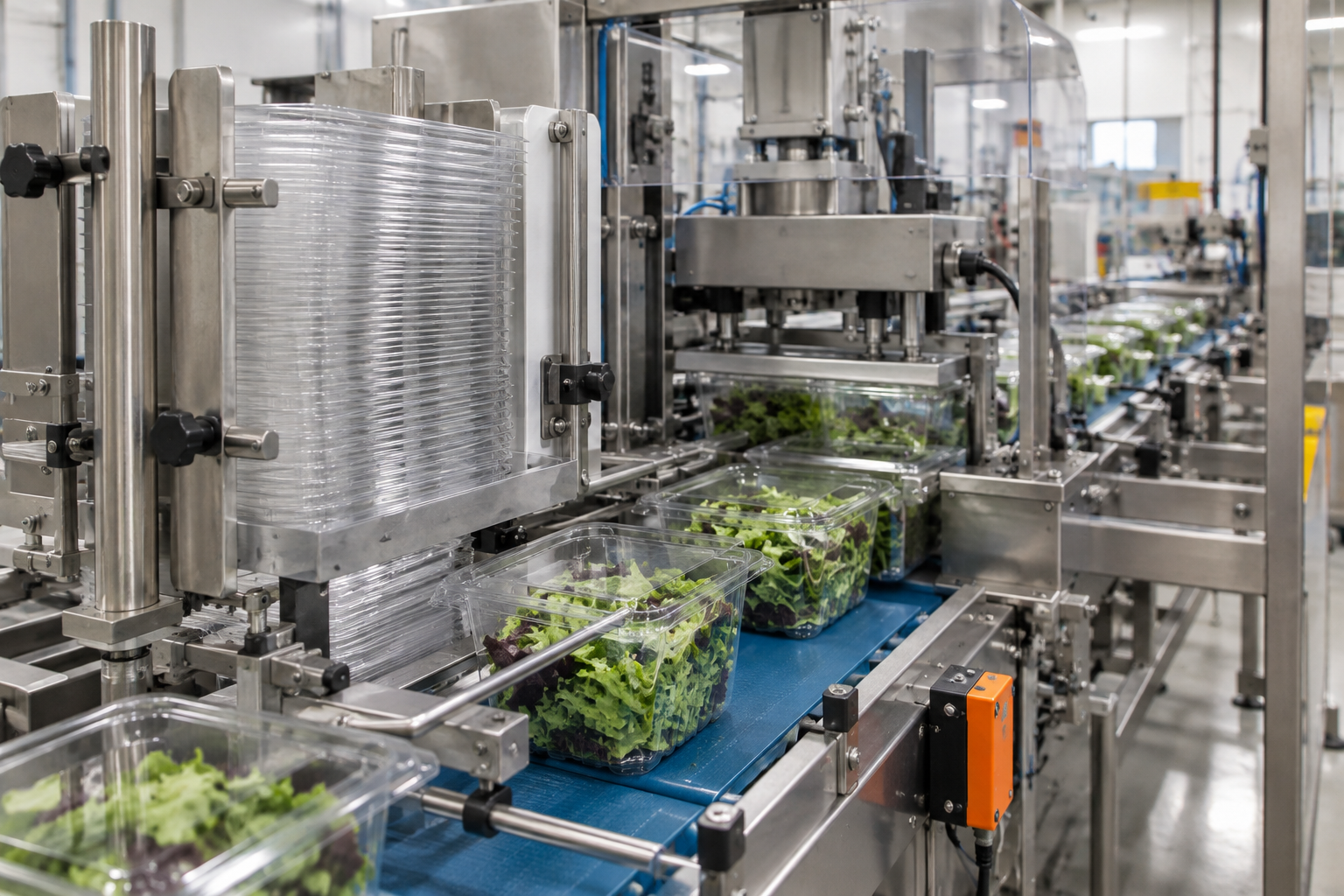
A practical daily, weekly, and monthly maintenance checklist for clamshell denesters, fillers, closers, labelers, and end-of-line equipment.
A clamshell line rarely goes from healthy to stopped without warning. Double-fed containers, wandering labels, and lids that need a second push often appear first. The maintenance job is to catch those changes before operators start compensating with extra air pressure, tighter guides, or repeated resets.
Build your checklist around the equipment manuals, sanitation requirements, and actual operating hours. A bakery running one shift has a different maintenance load than a berry packing operation running two shifts with frequent washdowns. The schedule below is a starting point, not a replacement for manufacturer instructions.
Make the Checklist Safe and Measurable
Separate running observations from hands-on maintenance. Operators can observe container flow from outside closed guards. Cleaning inside guarded areas, clearing hazardous jams, adjusting mechanisms, and replacing parts require the applicable energy-control procedure.
- Control every energy source: Follow lockout/tagout procedures for electrical, pneumatic, mechanical, and other hazardous energy. Isolate and bleed trapped air, secure raised assemblies, and verify isolation before work.
- Record the machine setup: Include container SKU, product, recipe, operating rate, and relevant pressure readings.
- Define acceptable condition: Use the manufacturer's belt tension, lubrication, clearance, and wear limits rather than subjective instructions such as “check belt.”
- Assign ownership: Identify who inspects, who repairs, and who authorizes return to production.
I prefer a short checklist with recorded findings over three pages of checked boxes. “Vacuum hose cracked at fitting, replaced” tells the next shift something useful.
Before Each Shift: Inspect the Product Path
Begin with the line clean, safely isolated where access requires it, and released by sanitation. Look for loose hardware, damaged belts, broken plastic guides, and residue around transfer points. Account for tools and removed parts before restarting.
- Conveyors: Inspect belt surfaces, splices, tracking, and transfer gaps. Remove trapped debris using approved methods.
- Container guides: Confirm settings match the scheduled clamshell. Look for rub marks that suggest excessive side pressure.
- Sensors: Clean lenses and reflectors with approved materials. Check mounts for looseness.
- Utilities: Inspect accessible hoses, cables, and fittings for damage. Confirm air pressure against the approved setup sheet.
- Safety devices: Perform the prescribed guard-interlock and emergency-stop checks. Never bypass a device to maintain output.
After guards are restored and the area is clear, run startup checks under the manufacturer's procedure. Watch empty containers and then filled packs through each transfer. Stop if containers tip, catch, or change orientation.
Daily Checks by Machine
Denester: Watch Separation and Placement
On a Clamshell Denester, inspect the separation components fitted to your machine, such as suction cups, fingers, or retaining devices. Check vacuum hoses for splits and cups for hardening, tears, or product buildup. Confirm that the magazine supports the stack without distorting it.
Count double feeds and missed placements over a consistent sample, such as 100 cycles. Compare results by container lot. If trouble begins with a new sleeve of clamshells, inspect nesting and flange condition before changing machine settings.
Filler: Check Cleanliness and Weight Performance
Inspect hoppers, gates, chutes, and weighing surfaces for residue or sticking product. Verify that weighing assemblies move freely and that nothing touches them unintentionally. A cable pulled tight against a weighing assembly can affect readings.
Check scale performance using the manufacturer's specified procedure and suitable test weights. Record results. Do not recalibrate simply to hide inconsistent filling caused by sticky gates, unstable product feed, or mechanical interference.
Closer: Inspect the Latch Path
The Clamshell Closing Machine handles 8-64 oz tamper-evident hinged containers at up to 80 containers per minute. Actual production settings must suit the container, product, and upstream flow.
Inspect lid guides, closing contact surfaces, and container supports for buildup and wear. Check finished packs for complete latch engagement, damaged flanges, and product trapped in the closure. A strawberry under the lid is a filling or presentation problem, not a reason to increase closing force.
Labeler and End-of-Line: Follow the Finished Pack
Remove adhesive residue from approved cleaning points on the labeler. Inspect the peel edge, rollers, web path, and sensor alignment. Follow the printhead manufacturer's cleaning instructions if print-and-apply equipment is installed.
At case packing and sealing, inspect guides, belts, tape heads, and transfer points. Look for packages catching on worn surfaces. Check palletizing grippers or vacuum components according to the equipment manual.
After Production: Clean Without Creating Damage
Match cleaning methods to each machine's washdown rating and sanitation procedure. Do not assume every motor, bearing, connector, or sensor can tolerate direct spray. Avoid blowing food debris into bearings or electrical enclosures with compressed air.
- Remove product and packaging scraps from designated collection points.
- Use approved chemicals at their specified concentration, temperature, and contact time.
- Inspect exposed components during cleaning and report cracks, corrosion, or loose seals.
- Dry or drain equipment as required before reassembly and startup.
- Apply only manufacturer-approved lubricant, using the specified amount and location. Where incidental food contact is possible, use the appropriate food-grade lubricant.
Weekly: Find Wear Before It Changes Timing
During scheduled downtime, inspect drive belts, chains, sprockets, bearings, and couplings where fitted. Check tension and alignment against the manual. Excessive tension can shorten bearing life; insufficient tension can cause slipping or poor timing.
Inspect pneumatic filters and condensate drains. Listen for air leaks during a safe operating observation, then isolate the machine before repairs. Check fasteners at sensor brackets, guide supports, and repeatedly adjusted changeover points. Use specified torque values rather than tightening everything harder.
Monthly: Review Trends and Stock Critical Parts
Review downtime by cause, not just total minutes. Track denester misses, closure rejects, label faults, and weight-check failures alongside operating hours and container lots. Repeated adjustments at the same station deserve a root-cause investigation.
Stock wear items based on installed equipment and supplier lead times. Typical candidates include suction cups, belts, sensors, approved lubricants, and labeler rollers. Verify part numbers before ordering. For broader packaging equipment planning, Packaging Machine is another resource; use the original equipment manufacturer's documentation for maintenance specifications.
Questions and Answers
Should we increase air pressure when the denester misses containers?
Not as a first response. Check container nesting, stack alignment, worn separation parts, vacuum leaks, and the approved pressure setting. Higher pressure can mask the cause or damage components.
How do we separate closure wear from an overfilled clamshell?
Compare correctly filled packs with empty containers using the approved test procedure. Inspect for product in the latch path, damaged flanges, and worn closing surfaces before adjusting the closer.
When should a maintenance interval become shorter?
Shorten it when inspections show deterioration before the next scheduled service, or when operating hours, washdowns, or abrasive debris increase. Document the evidence and review the revised interval with the equipment supplier.
Explore the machines
- Clamshell Denester — Separates nested clamshells and places them on the line.
- Clamshell Filling Systems — Accurate weighing and filling of fresh product.
- Clamshell Closing Machine — Closes and locks hinged clamshell lids automatically.
- Clamshell Labeler — Top, bottom and wrap labeling with print-and-apply options.
- End-of-Line Systems — Case packing, case sealing and palletizing.