Labor Math: Payback for Automating Clamshell Closing
Nov 7, 2026
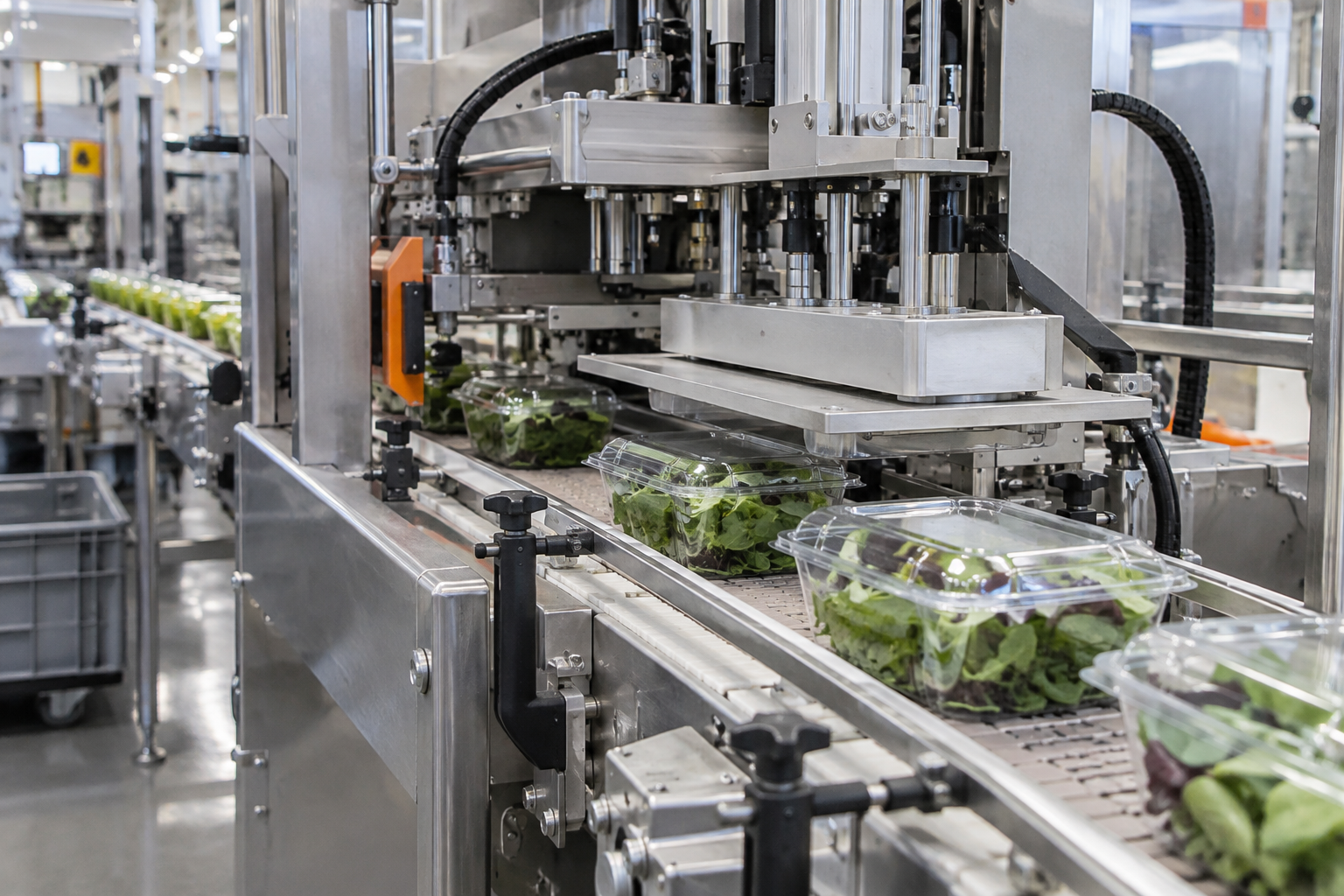
Calculate clamshell closing automation payback using recoverable labor hours, installed cost, operating expenses, and realistic production assumptions.
Start with labor you can actually recover
A clamshell closer does not pay for itself just because two people stop pressing lids. It pays back when the plant converts their time into lower payroll, less overtime, fewer temporary labor hours, or measurable output that produces additional profit.
That distinction matters. Moving two closers to a sorting table may solve a staffing problem, but it does not automatically reduce operating expenses. Before calculating payback, decide what those employees will do after installation and which costs will actually disappear.
I would rather approve a project with a defensible 24-month payback than sell management a 12-month estimate built on hours nobody can recover.
Measure the closing job, not just the shift
Watch the closing station across several representative runs. Include your difficult containers and products, not just the package that snaps shut easily. A berry pack with fruit above the rim creates different work than a bakery pack with a clean flange.
Record these items:
- Staffing: Dedicated closers, shared helpers, and relief coverage.
- Working time: Minutes spent closing versus waiting for product, changing containers, cleaning, or clearing backups.
- Line output: Good containers leaving the station, not the highest momentary conveyor count.
- Rework: Open corners, trapped product, damaged hinges, and containers that need a second touch.
- Schedule: Actual operating days, seasonal overtime, and temporary labor use.
Separate work the machine removes from work that remains. Inspecting lid engagement, replenishing upstream containers, and responding to faults still require attention. Do not assume an unattended closing station means an unattended line.
Build a loaded hourly labor rate
Hourly wages alone understate labor expense. Start with base wages, then add employer payroll taxes, workers' compensation, and applicable benefits. Use your payroll department's figures rather than a standard percentage pulled from another plant.
For an illustrative calculation, assume a $20 hourly wage and an additional 25% for employer costs:
Loaded hourly rate = $20 × 1.25 = $25.
That rate is an example, not an industry benchmark. Temporary workers should generally be evaluated using the agency's invoiced rate. For overtime, calculate the actual incremental employer cost. Do not simply multiply every component of the loaded rate by 1.5.
There is another wrinkle: some benefits and overhead remain after staffing changes. For a cash-payback calculation, count only costs that the project can avoid. Keep broader labor-capacity benefits in a separate column.
A worked example: two manual closing positions
Consider a hypothetical plant running one 8-hour shift, 250 days per year. Two employees manually close containers. After accounting for breaks, changeovers, and other duties, the study identifies seven hours per employee per day of closing work that automation could remove.
The plant also budgets shared operator attention equivalent to half an employee over those same seven hours. That allowance covers monitoring, minor interventions, and related handling.
- Current annual closing labor: 2 × 7 hours × 250 days × $25 = $87,500.
- Retained annual operator attention: 0.5 × 7 hours × 250 days × $25 = $21,875.
- Potential annual labor savings: $87,500 − $21,875 = $65,625.
Now assume $6,000 per year in incremental operating costs, including planned maintenance, wear parts, utilities, and any added sanitation labor. Net annual savings become $59,625.
With an illustrative total installed investment of $90,000:
Simple payback = $90,000 ÷ $59,625 = 1.51 years, or about 18.1 months.
These figures are planning assumptions, not equipment pricing or a savings guarantee. The result also assumes the plant can convert all the identified labor savings into avoided expense.
Use installed cost, not the machine price
The investment side should include everything required to reach stable production. Freight and installation are obvious. Conveyor modifications, electrical work, guarding integration, container trials, training, and startup disruption are easier to overlook.
Ask suppliers to define the scope clearly. Who supplies the transfer conveyor? Who handles line controls? Is your full container range included in acceptance testing?
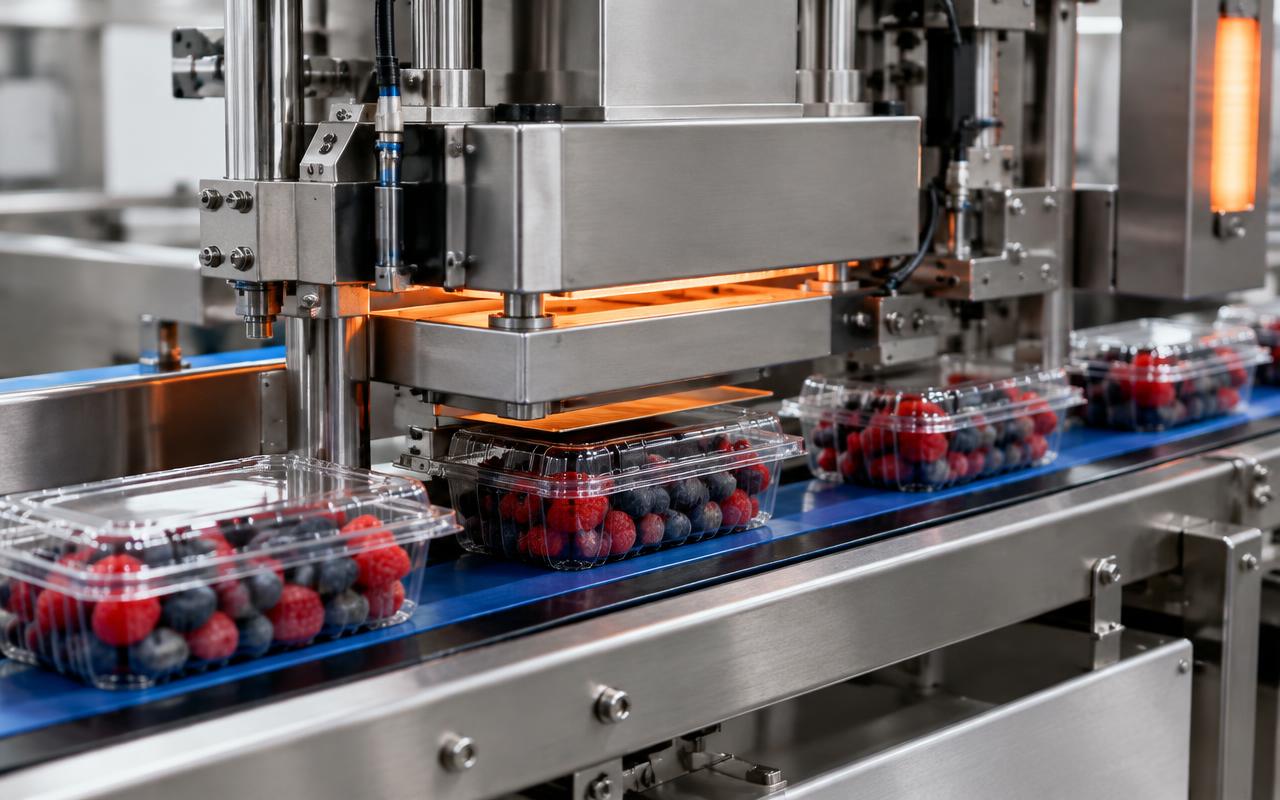
The Clamshell Closing Machine handles 8-64 oz tamper-evident hinged containers at up to 80 containers per minute. That maximum is not a guaranteed sustained rate for every package or product. Confirm performance using your actual containers, fill conditions, and upstream delivery pattern.
For broader integration discussions, Packaging Machine is another relevant equipment resource. Request a clearly itemized project scope so installation allowances do not get mistaken for firm quotations.
Stress-test the savings before signing
Run at least one conservative case. Suppose the plant can recover only 70% of the projected $65,625 labor benefit because seasonal schedules and staffing assignments limit payroll reductions.
Conservative annual savings = ($65,625 × 0.70) − $6,000 = $39,937.50.
At the same $90,000 investment, payback stretches to about 27 months. That is still worth evaluating, but it is a different approval conversation.
Check the production constraint, too. If filling limits the line, faster closing alone will not create more saleable cases. Reviewing the Clamshell Filling Systems alongside closing may identify where capacity is actually being lost. Any additional equipment investment belongs in the project calculation.
Keep throughput gains separate from labor savings. Additional containers have value only when there is demand, upstream supply, and downstream capacity. Use incremental contribution margin, not sales revenue, and avoid counting labor savings twice.
Verify the result after startup
Compare the approved assumptions with actual payroll, overtime, agency invoices, good-container counts, and maintenance expenses after production stabilizes. Track startup costs separately from recurring costs.
Simple payback is useful for screening projects, but it ignores the time value of money and benefits after the payback date. For larger investments, ask finance to evaluate cash flows over the expected service life as well.
Questions and Answers
Does moving manual closers to another station count as payback?
Not automatically. It becomes a financial benefit when the move avoids hiring, overtime, temporary labor, or another measurable expense. Otherwise, report it as released labor capacity rather than payroll savings.
Should I calculate labor savings using 80 containers per minute?
No. Use verified sustained output and recoverable labor hours. The closer's maximum rating does not account for your filling interruptions, container variation, changeovers, or downstream backups.
How should a seasonal packer calculate closing automation payback?
Build the calculation from actual annual operating hours and staffing by season. Apply the appropriate regular, overtime, or agency labor cost to each period, then subtract annual incremental operating expenses.
Explore the machines
- Clamshell Denester — Separates nested clamshells and places them on the line.
- Clamshell Filling Systems — Accurate weighing and filling of fresh product.
- Clamshell Closing Machine — Closes and locks hinged clamshell lids automatically.
- Clamshell Labeler — Top, bottom and wrap labeling with print-and-apply options.
- End-of-Line Systems — Case packing, case sealing and palletizing.