Deli Clamshell Lines: Hygiene-First Design
Oct 25, 2026
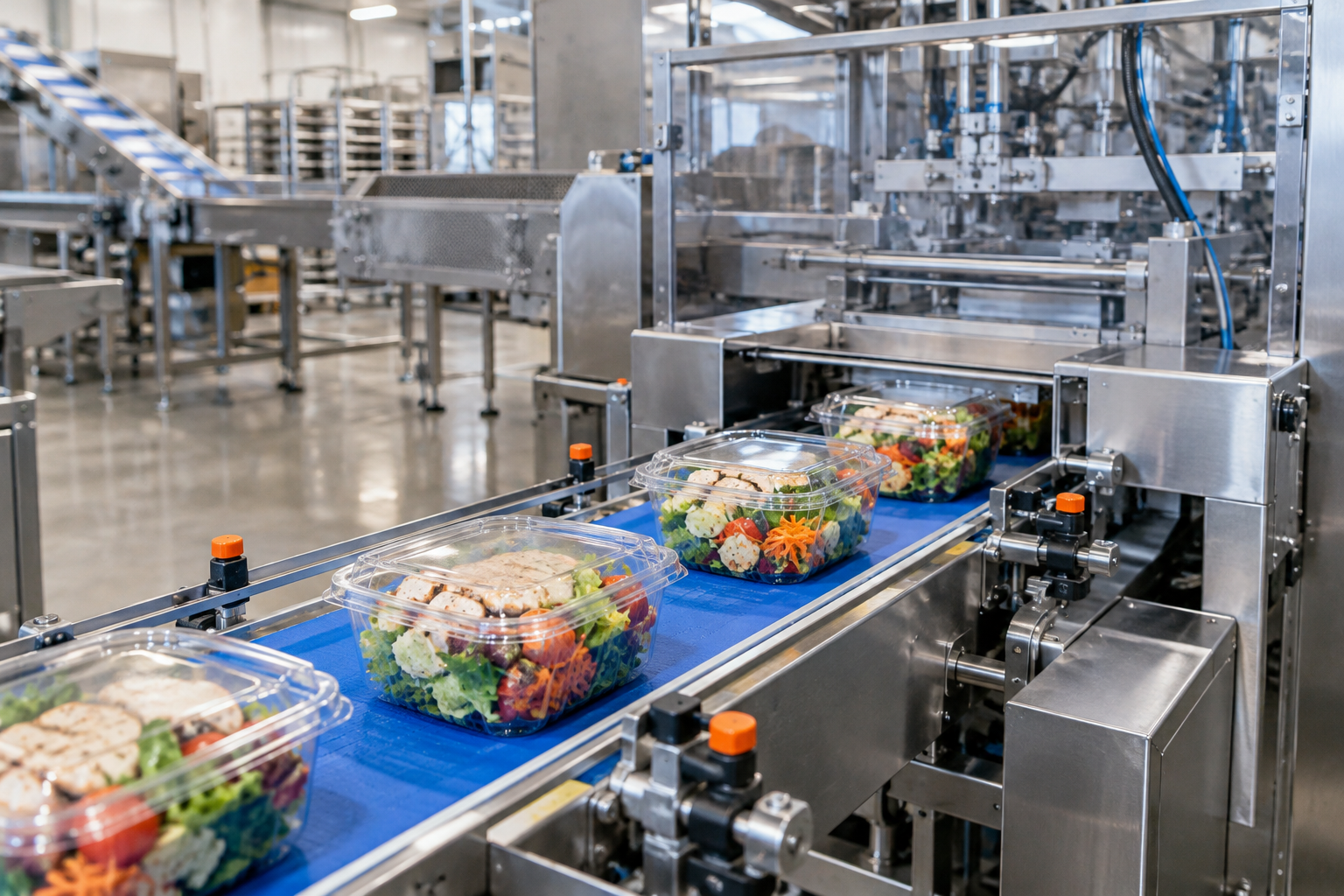
Design deli and prepared-food clamshell lines around clean traffic, temperature control, accessible equipment, and reliable sanitation.
Start with the exposed food, not the conveyor
A clamshell line packing chicken salad has a different hygiene problem than a line packing whole apples. The salad may be ready to eat, handled after cooking, and sold without another kill step. Every contact surface between the mixing bowl and the closed package matters.
Start the layout review with one question: what can reach the food while the container is open? Hands, utensils, condensate, splash, packaging debris, and poorly cleaned equipment all belong on that list. Throughput comes next. A fast line that cannot be cleaned or kept cold is not ready for production.
Separate raw traffic from ready-to-eat work
Draw the movement of ingredients, employees, containers, utensils, waste, and finished cases. Use separate lines on the drawing. Wherever raw-product traffic crosses exposed ready-to-eat food, redesign the route or establish a controlled separation procedure.
For a deli packing cooked chicken meals, raw poultry receiving and preparation should not share an uncontrolled path with the filling station. The same applies to dirty carts returning from the wash area. A clean cart does not stay clean if employees push it through a wet raw-preparation room.
- Remove shipping cartons outside the exposed-product area wherever practical.
- Store unused clamshells covered and protected from splash and overhead contamination.
- Keep waste removal away from open containers and clean utensil storage.
- Provide handwashing and protective-clothing controls at the actual entry points.
Floor markings help explain a boundary. They do not stop splash, airflow, or employees taking a shortcut. Where risk requires physical separation, install it.
Make the open-container section short and accessible
Arrange denesting, filling, rim inspection, and closing in a compact sequence. Avoid long accumulation sections with uncovered meals waiting behind a stopped closer. A short path reduces exposure time, but only if operators can still inspect and clean it.
A clamshell denester separates nested containers and places them on the line, reducing the need for employees to handle each package. It does not sanitize the packaging. Review where its contact points touch the container, how packaging dust is removed, and whether maintenance can be performed without reaching over exposed food.
Consider a layout with a 12-foot conveyor between filling and closing. Before accepting that distance, ask what work actually happens there. If the answer is only accumulation, a shorter section with coordinated stops may be preferable. If employees add garnishes there, preserve enough room for controlled handling and cleaning.
Specify equipment around soil removal
Stainless steel alone is not a sanitation specification. Chicken salad leaves fat and protein. Pasta sauce can dry onto guides. Shredded cheese falls into joints. The machine must let the crew reach and remove those soils.
I would rather see a supplier demonstrate belt removal than hear another claim about easy cleaning. Ask for a teardown using the tools and access available on your floor.
- Food-contact surfaces: Look for smooth, durable surfaces and joints that can be inspected and cleaned.
- Conveyors: Require access to belt undersides, return rollers, guides, and transfer points.
- Frames: Avoid exposed threads, inaccessible cavities, and horizontal ledges that collect food or water.
- Utilities: Route hoses and cables so they do not create cleaning obstructions or hang over open packages.
- Electrical components: Match enclosures and installation details to the documented cleaning method.
Do not assume equipment can tolerate hose-down cleaning because it sits in a food plant. Confirm permitted water exposure, chemical compatibility, and disassembly procedures before purchase.
Control temperature through stops and restarts
Cold ingredients can warm during staging, filling, rework, and downtime. Measure product temperature at meaningful points, including the end of a run and after a stoppage, rather than checking only the cooler.
For retail operations following the FDA Food Code, cold-held time/temperature control for safety food generally must remain at 41°F or below. Applicable requirements depend on the operation and jurisdiction. Establish limits and corrective actions through the facility's food safety program.
Use smaller replenishment batches when a large hopper would hold food too long. Define what happens when the closer stops: stop filling, protect exposed product, record the delay, and assess time and temperature before restarting. Do not automatically return accumulated food to the next batch.
If meals are packed warm for later refrigeration, validate cooling in the actual container and stack arrangement. A closed lid and tightly stacked cases can slow heat removal. Cold-holding equipment is not automatically suitable for cooling hot food.
Keep food out of the closing features
A smear of dressing across the flange is more than a cosmetic defect. It can interfere with latching, soil the closing mechanism, and spread residue to later packages. Set the portion and fill location so food stays clear of the hinge, rim, and locking features.
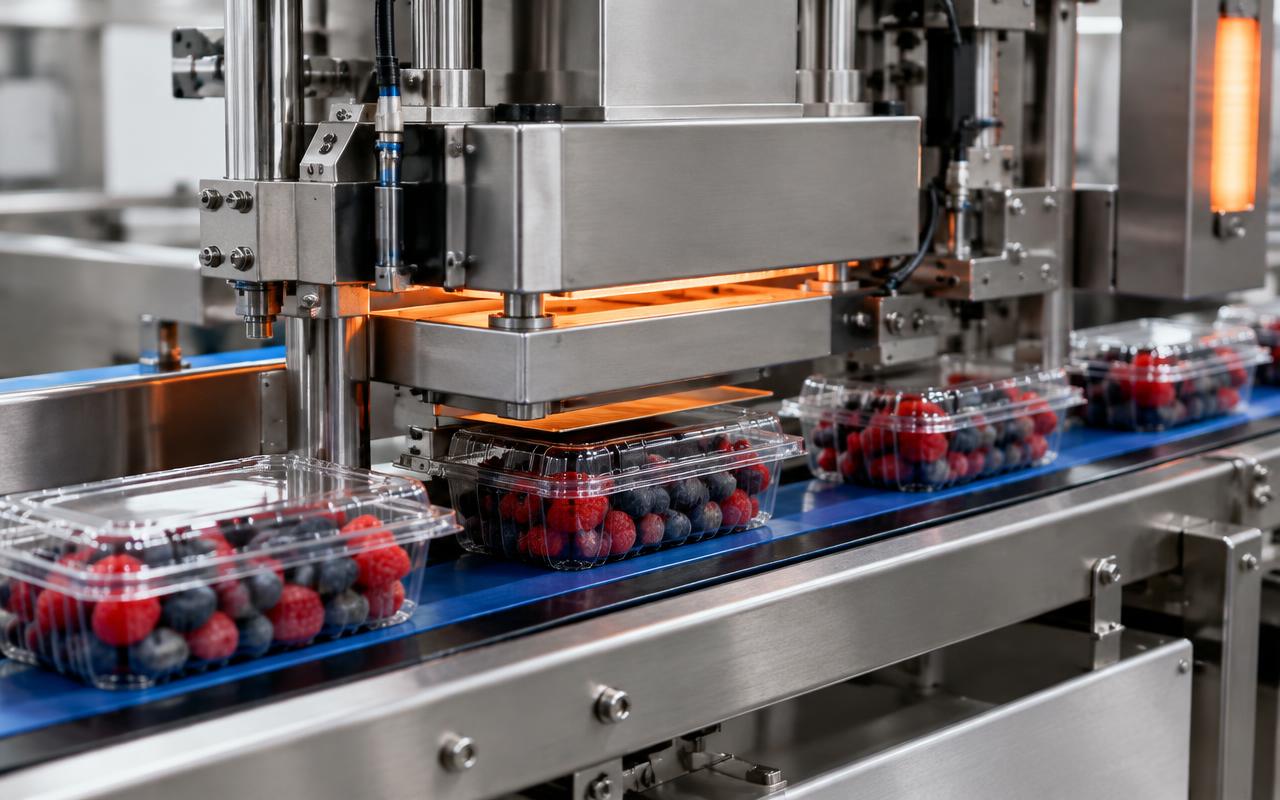
The clamshell closing machine handles 8-64 oz tamper-evident hinged containers at up to 80 containers per minute. Actual performance depends on the package and application. Test the intended container with representative meals, including the highest permitted fill and bulky ingredients near the lid.
Check closure engagement after startup, adjustments, and jams. Tamper evidence does not mean a package is hermetically sealed, leakproof, or microbiologically safe. Specify each required package function separately.
Build sanitation into the production schedule
Write cleaning procedures around the actual foods and equipment. Include disassembly, soil removal, washing, rinsing where required, sanitizing according to label directions, inspection, and reassembly. Keep removed parts protected from floors and dirty surfaces.
Allergen changeovers need specific controls. A change from egg-containing potato salad to a recipe without egg cannot be managed by appearance alone. Validate the cleaning approach and use appropriate verification. ATP testing can support hygiene checks, but it does not establish that a surface is allergen-free or pathogen-free.
For ready-to-eat operations, environmental monitoring should reflect the product risk and applicable requirements, with defined responses to findings. When discussing integrated equipment with Packaging Machine, include sanitation access and changeover requirements in the specification, not just container dimensions.
Questions and Answers
Should empty deli clamshells be rinsed before filling?
Not by default. Rinsing adds water and may introduce contamination. Use packaging supplied for the intended food-contact use, protect it during storage, and evaluate any treatment through the food safety program.
Where should employees remove dressing from a contaminated rim?
Divert the package to a designated inspection or rework station. Do not wipe rims over the running conveyor with a shared cloth. Define when to repackage or discard the food.
Can one line pack both raw meat and ready-to-eat deli meals?
Shared use requires a documented hazard assessment, effective separation, and validated cleaning controls. Dedicated equipment may be the safer practical choice when raw-product contamination cannot be reliably controlled.
Explore the machines
- Clamshell Denester — Separates nested clamshells and places them on the line.
- Clamshell Filling Systems — Accurate weighing and filling of fresh product.
- Clamshell Closing Machine — Closes and locks hinged clamshell lids automatically.
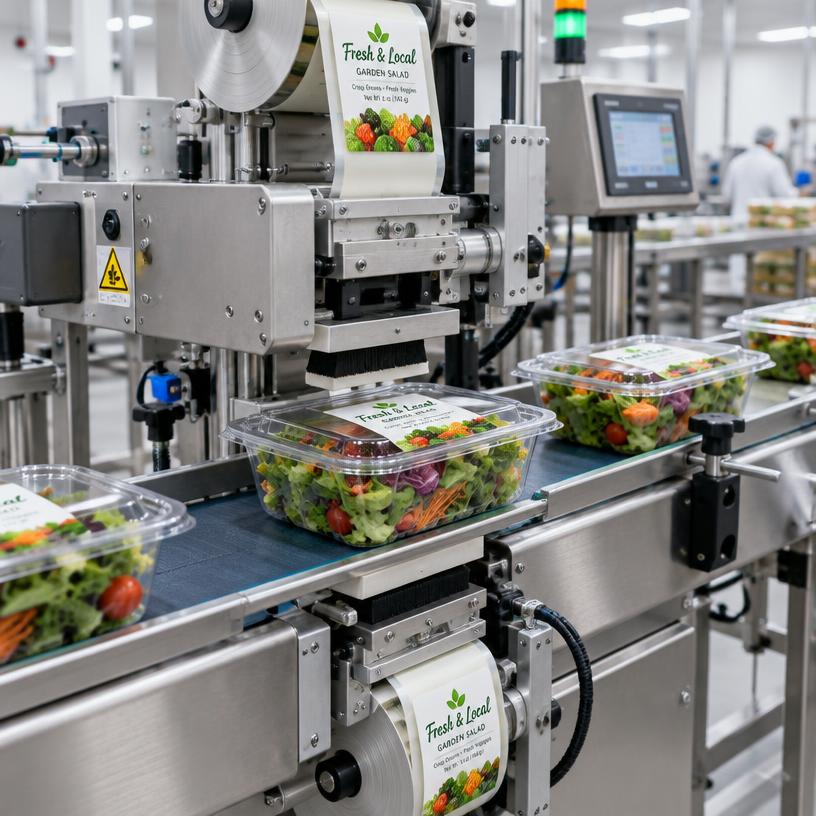
- Clamshell Labeler — Top, bottom and wrap labeling with print-and-apply options.
- End-of-Line Systems — Case packing, case sealing and palletizing.