Clamshell Filling Machine: Weigh, Count and Volumetric Options
Oct 1, 2026
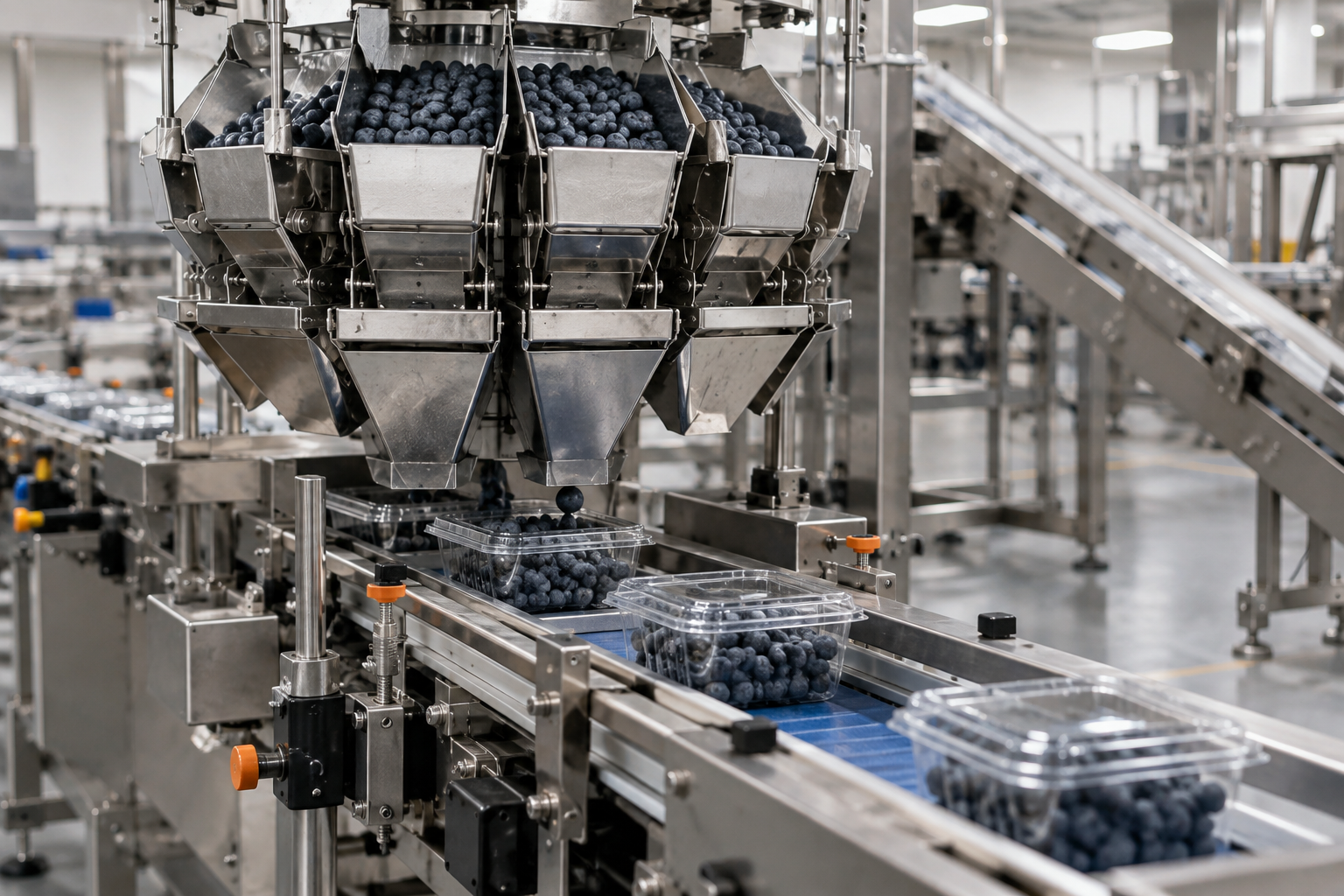
Compare weigh, count and volumetric clamshell filling for produce and bakery products, including accuracy, product damage, changeovers and line integration.
Choose the measurement method before the machine
A clamshell filling machine has two jobs: deliver the right amount of product and get it into the container without damage or interference with closing. Those jobs are related, but they are not the same. A filler can hit its weight target and still leave berries across the sealing rim.
The three main portioning methods are weighing, counting and volumetric filling. Start with what the package promises the customer. An 8 oz net-weight berry pack, a six-count muffin pack and a container filled to a consistent level require different controls.
I would settle that question before discussing conveyor layout. Otherwise, you risk buying a fast dispensing system that measures the wrong thing.
Weigh filling: control the amount by mass
Weigh fillers use load cells to measure product before or during delivery. In a net-weigh arrangement, product collects in a weigh bucket and then discharges into the clamshell. In a gross-weigh arrangement, the container sits on a scale while it fills, with its empty weight accounted for through taring.
Linear weighing systems feed one or more weigh buckets. Combination weighers use multiple buckets and select a combination of portions near the target. The appropriate design depends on product behavior, portion size, required throughput and acceptable handling.
Where weighing fits
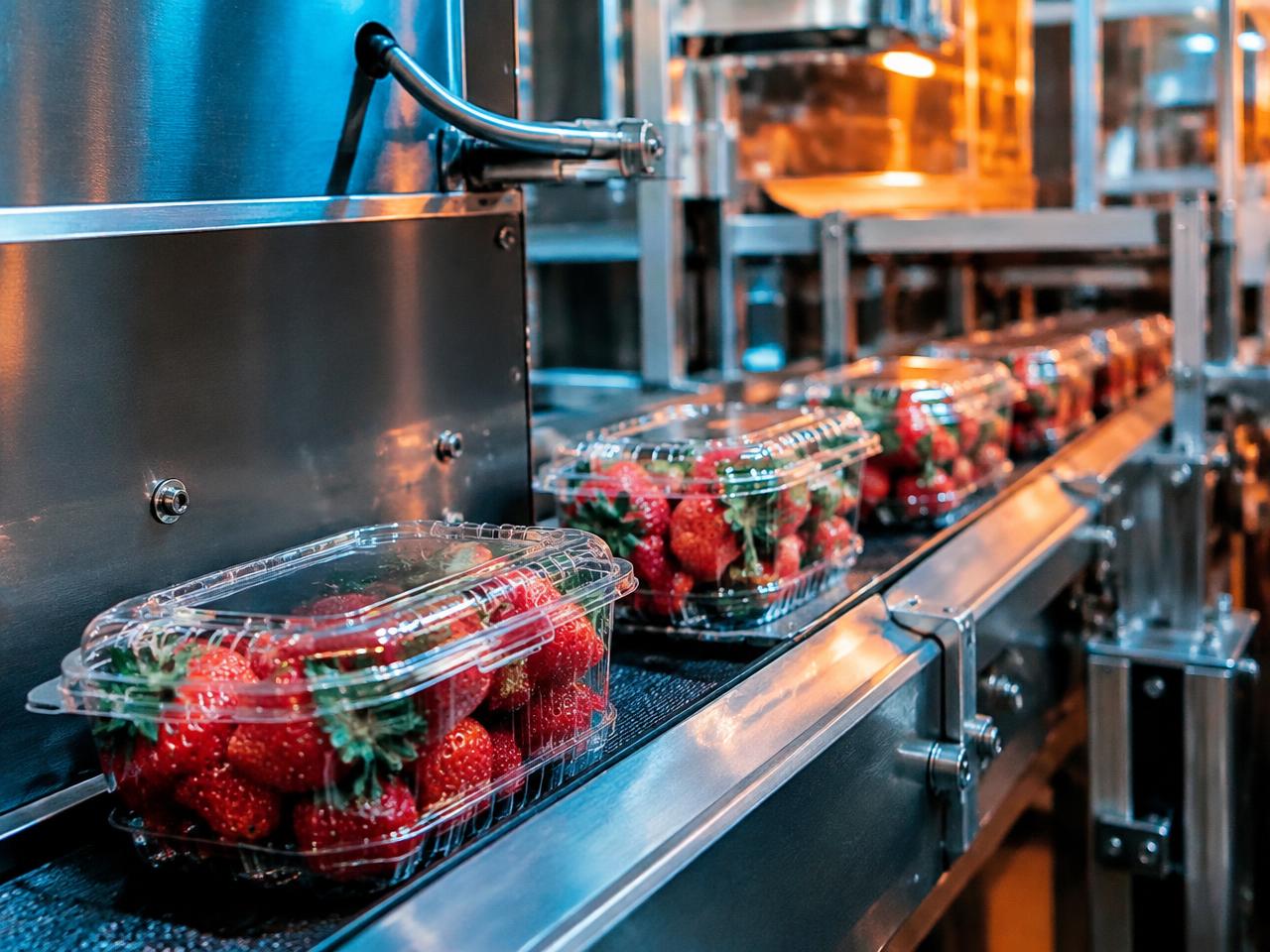
Weighing is usually the starting point for fresh products sold by net weight, including berries, cherry tomatoes and cut vegetables. Individual pieces vary. A fixed number of strawberries will not consistently produce an 8 oz pack.
Consider a hypothetical 10,000-pack run with an average overfill of 0.2 oz. That represents 125 lb of product above the declared quantity. Reducing unnecessary overfill can matter, but only after the process reliably meets applicable net-content requirements. Setting the average exactly at the label claim without understanding variation is not a sound control plan.
What to watch during trials
Weight accuracy depends on more than the scale. Product still falling after the feeder stops can cause overshoot. Conveyor vibration can disturb readings. Juice and debris can build up on buckets or discharge gates.
For delicate produce, follow the entire path. Several short drops can cause cumulative damage even when no single drop looks severe. Test actual fruit at representative temperatures and ripeness levels, then inspect it after its normal holding period, not just at discharge.
Count filling: control the number of pieces
Count filling delivers a specified number of items. A system may use photoelectric sensors, vision, indexed pockets or controlled pick-and-place handling. The critical step is presenting individual pieces so the equipment can distinguish and transfer them reliably.
This approach suits products sold by count, such as four brownies or six muffins. But counting is only part of the job. A six-cavity bakery clamshell needs one item in each pocket, not six items dropped into the middle.
Separation and placement determine performance
Touching cookies, overlapping rolls and broken pieces complicate counting. A sensor might see two touching items as one. A fragment might register as a whole piece unless the system has suitable discrimination.
Ask how the equipment handles an incomplete group. Does it wait for another piece, divert the group or flag the container for rejection? Also verify what happens after a jam or restart. Losing track of one item can create several incorrect packs if the control sequence does not recover properly.
A correct count does not guarantee a correct net weight. If the package also makes a weight declaration, piece-weight variation still needs control and verification.
Volumetric filling: control a measured space
Volumetric fillers dispense a defined volume using cups, chambers or other calibrated metering devices. Augers and timed-feed arrangements can also meter portions, although their suitability depends heavily on the product. For dry, reasonably uniform products, a volumetric system can offer straightforward portioning without weighing every dose.
The limitation is bulk density: how much product occupies a given space. Piece size, settling, moisture and the amount of broken material can change the weight delivered by the same measuring cup.
Where volume works, and where it becomes risky
Uniform, free-flowing products are better candidates than irregular pieces that bridge or interlock. Small dry bakery bites may meter predictably. Large fragile cookies generally need a different handling approach.
Suppose a calibrated chamber delivers 4 oz of one product lot. If the next lot has a bulk density 10 percent lower, that same chamber would deliver about 3.6 oz, assuming the filling behavior remains unchanged. The chamber has not changed. The product has.
For a net-weight package, volumetric dispensing therefore requires weight checks and adjustment as conditions change. Looking full is not evidence that a pack contains the declared amount.
Match the filler to the clamshell
The container opening, hinge position, rim geometry and internal cavities affect the discharge design. A funnel must guide product without snagging the lid or rubbing the container. Product must clear the rim before closing.
Use actual production clamshells in trials, including samples from different lots. Check whether the empty container stays stable during filling and whether a loaded container transfers without spilling. An 8 oz portion can land differently in a shallow, wide pack than in a narrow, deep one.
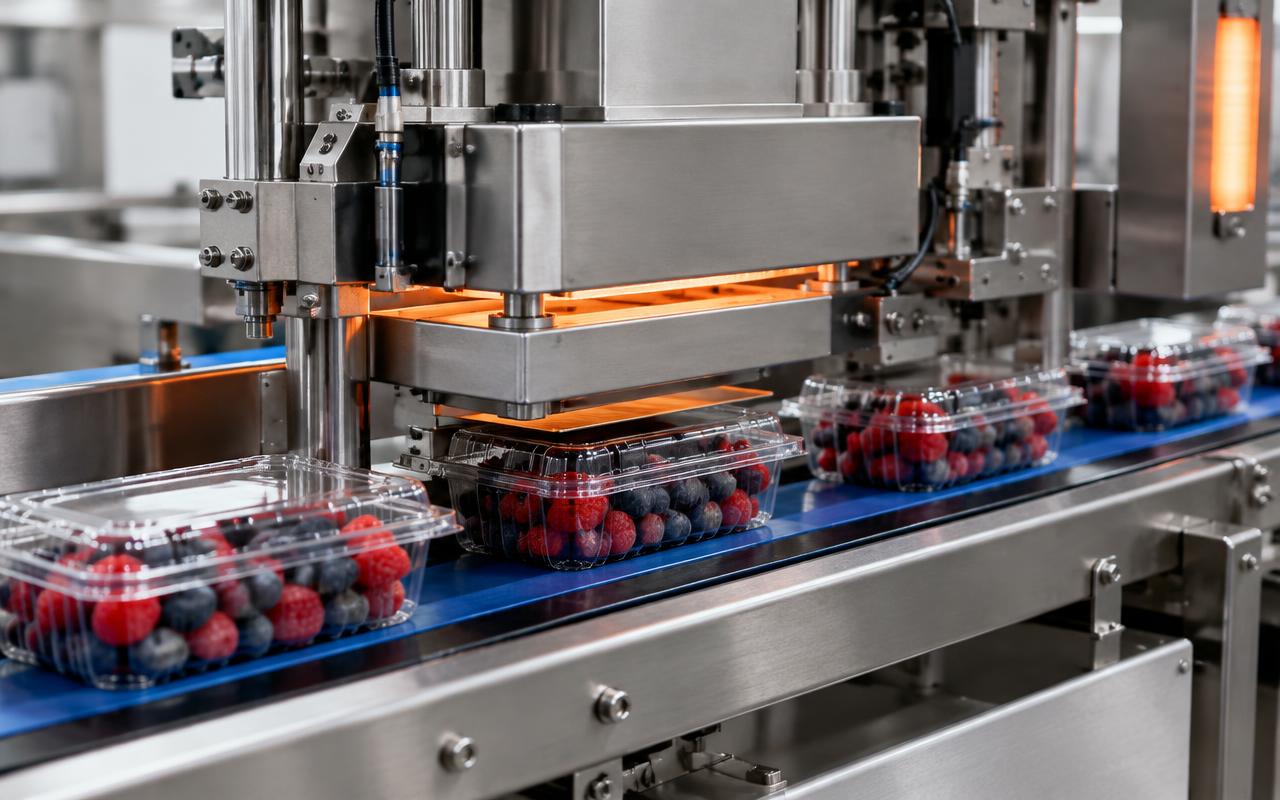
When reviewing Clamshell Filling Systems, request testing of the complete transfer, not just the measurement mechanism. Accurate portioning is only useful when the full portion reaches the pack.
Evaluate the complete line, not an isolated filler
Ask for sustained good-pack output with your product and container. Include replenishment, changeovers, cleaning and recovery from ordinary stops. A short demonstration with ideal product does not establish shift-long performance.
- Product range: Trial small and large pieces, sticky lots and expected breakage levels.
- Verification: Define weight or count checks, rejection methods and recordkeeping.
- Sanitation: Inspect removable contact parts, drainage where applicable and access beneath discharge points.
- Changeovers: Identify tooling changes, recipe settings and checks required before restarting.
Coordinate downstream capacity as well. The Clamshell Closing Machine handles 8-64 oz tamper-evident hinged containers at up to 80 containers per minute. That rating is not a promise that every product and filler combination will sustain that output. For broader packaging equipment planning, Packaging Machine is another resource to consult.
Questions and Answers
Should strawberries be filled by weight or count?
For strawberries sold by net weight, weighing is generally the appropriate starting point. Berry size varies too much for a fixed count to reliably deliver the declared weight. Gentle feeding and controlled discharge remain essential.
Can a volumetric filler run a net-weight clamshell package?
Yes, if the product meters consistently and the operation verifies package weights. Establish checks and adjustment procedures for changes in bulk density, moisture and piece size. Do not rely on fill height alone.
What should a six-count muffin filling trial demonstrate?
It should demonstrate accurate counting, one muffin per cavity, acceptable orientation and minimal damage. Include missing pieces, touching muffins and restart tests so you can see how the system prevents incomplete or incorrectly loaded packs.
Explore the machines
- Clamshell Denester — Separates nested clamshells and places them on the line.
- Clamshell Filling Systems — Accurate weighing and filling of fresh product.
- Clamshell Closing Machine — Closes and locks hinged clamshell lids automatically.
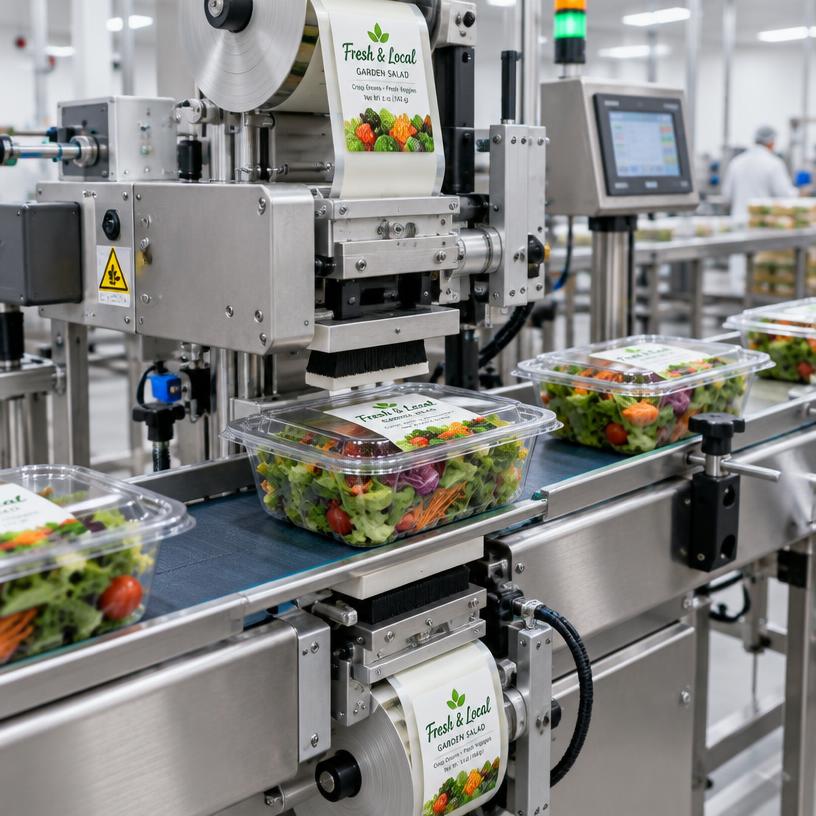
- Clamshell Labeler — Top, bottom and wrap labeling with print-and-apply options.
- End-of-Line Systems — Case packing, case sealing and palletizing.