Bakery Clamshells: Pack Cookies and Muffins Without Crushing
Nov 10, 2026
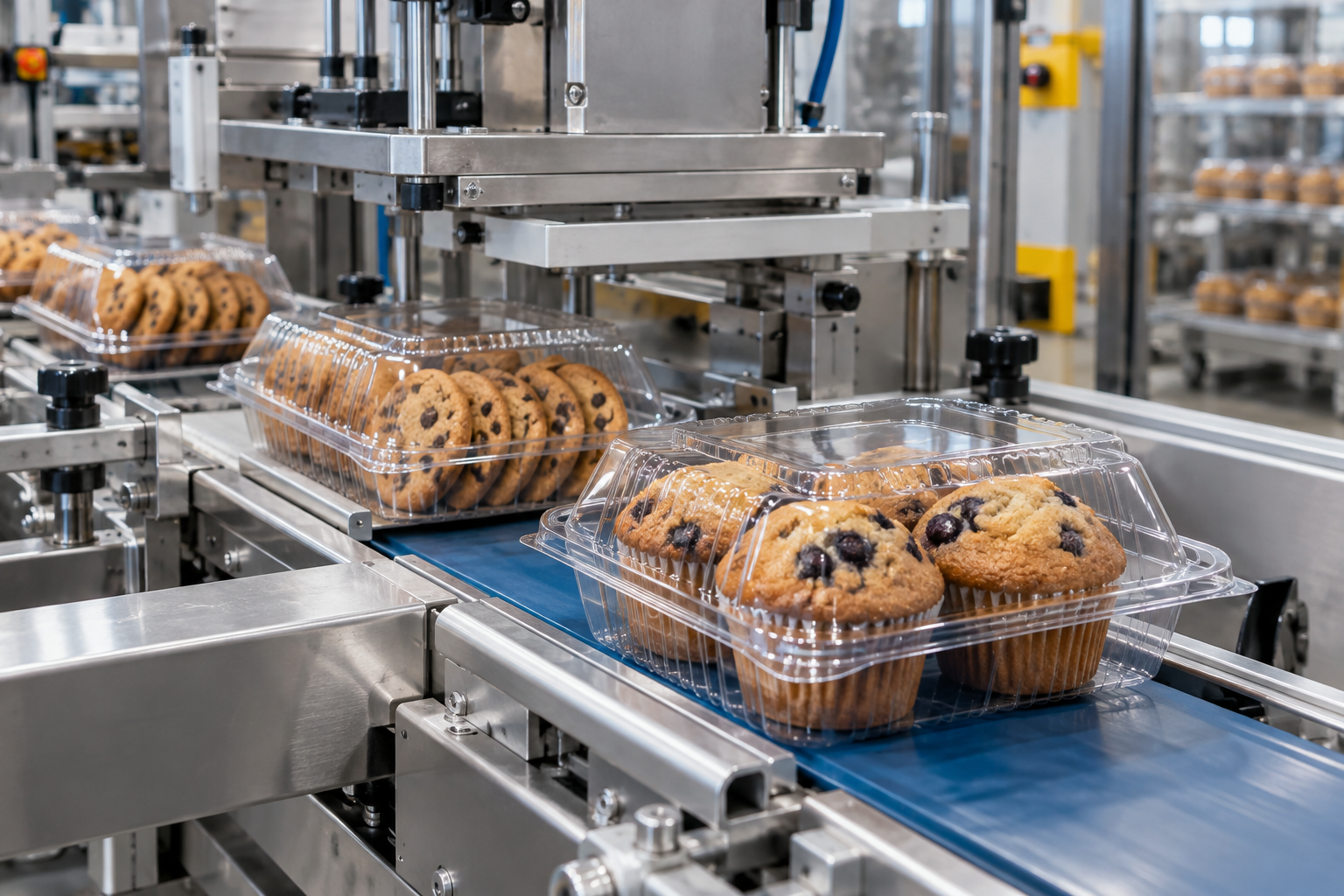
Practical ways to protect cookies and muffins through clamshell selection, loading, lid closing, labeling, and case packing.
Start with the product, not the machine speed
A bakery clamshell has to protect its contents while moving through loading, closing, labeling, and shipping. Cookies can chip at a transfer point. Muffin crowns can touch the lid before the latch engages. A package that looks acceptable on the packing table may still allow damage when cases are stacked.
The starting point is the actual product range, including the tallest muffins, widest cookies, and most delicate toppings. Select the package and handling method around those conditions, then establish a sustainable operating rate. Faster closing will not correct an undersized container or an uneven load.
Choose clearance and support together
Nominal container capacity does not tell you whether a bakery item fits. Compare the usable interior dimensions with finished product dimensions. Check the base, sidewall taper, lid ribs, hinge area, and space beneath the closed lid. The narrowest or lowest feature may determine whether the package works.
For muffins, evaluate crown width separately from cup diameter. A cavity that holds the paper liner securely may still place neighboring crowns too close together. For cookies, check whether the intended arrangement puts fragile edges against a wall or leaves a stack leaning toward the latch.
- Vertical clearance: Close the lid over the tallest expected product without pressing it down.
- Lateral support: Limit movement without squeezing edges, crowns, or decorations.
- Closure clearance: Keep product and liners away from the hinge, rim, and locking features.
- Removal space: Confirm that the customer can lift out the product without breaking it.
Do not solve every damage problem by choosing a larger package. Extra room may let cookies slide or muffins tip. Compare cavity designs or suitable food-contact inserts when additional support is needed, and verify them with the package supplier.
Establish a consistent packing condition
Define when each recipe is ready to pack. Warm cookies may deform during handling, while retained heat and moisture can affect the condition inside a closed package. Muffins also need a repeatable cooling and handling process. Appearance alone is not a reliable release criterion.
Work with your food safety and quality teams to set product-specific packing requirements. Record the approved condition and check it during production. Do not assume that a cooling time established for a small cookie applies to a large muffin or a different recipe.
Include toppings in the evaluation. A cookie base may tolerate contact that its icing cannot. A muffin crown covered with loose streusel may need more careful placement than a plain product. Assess damage after the package is closed, not just immediately after loading.
Reduce drops, gaps, and abrupt stops
Trace the product path from the cooling area to the open clamshell. Look for unsupported transfers, sharp changes in direction, and places where products collect against one another. Reducing an unnecessary transfer is often worth investigating before adding another handling device.
Set loading positions so operators or handling equipment can place product rather than drop it. Keep the receiving container stable. For cookies, support the product during placement and avoid using the package wall to straighten a misaligned stack. For muffins, check that liners enter their cavities without folding under or catching on the rim.
A clamshell denester separates nested containers and places them on the line. Its role is container presentation, not product protection by itself. During a trial, check whether each container reaches loading open, correctly oriented, and consistently positioned.
Compare transfer heights, conveyor gaps, and stopping behavior using actual products. Watch starts and restarts as well as steady running. A brief accumulation can change the handling conditions even when the normal conveyor motion looks gentle.
Match loading to cookies and muffins
Product count is only part of the loading requirement. Orientation, spacing, and stack height determine whether the lid can close without touching the food. Document the intended arrangement with clear acceptance criteria rather than asking operators to make each pack look approximately right.
For stacked cookies, specify the count and allowable stack position. Check dimensional variation across the bake, especially when one oversized cookie can interfere with the closure. For muffins, verify that every liner is seated and that adjacent crowns do not overlap.
When evaluating automated loading, ask the supplier to demonstrate the proposed method with representative products. Do not assume a system designed to weigh or dispense loose product will also orient delicate bakery items. The handling method must match the product's shape and fragility.
Close the lid without using it as a press
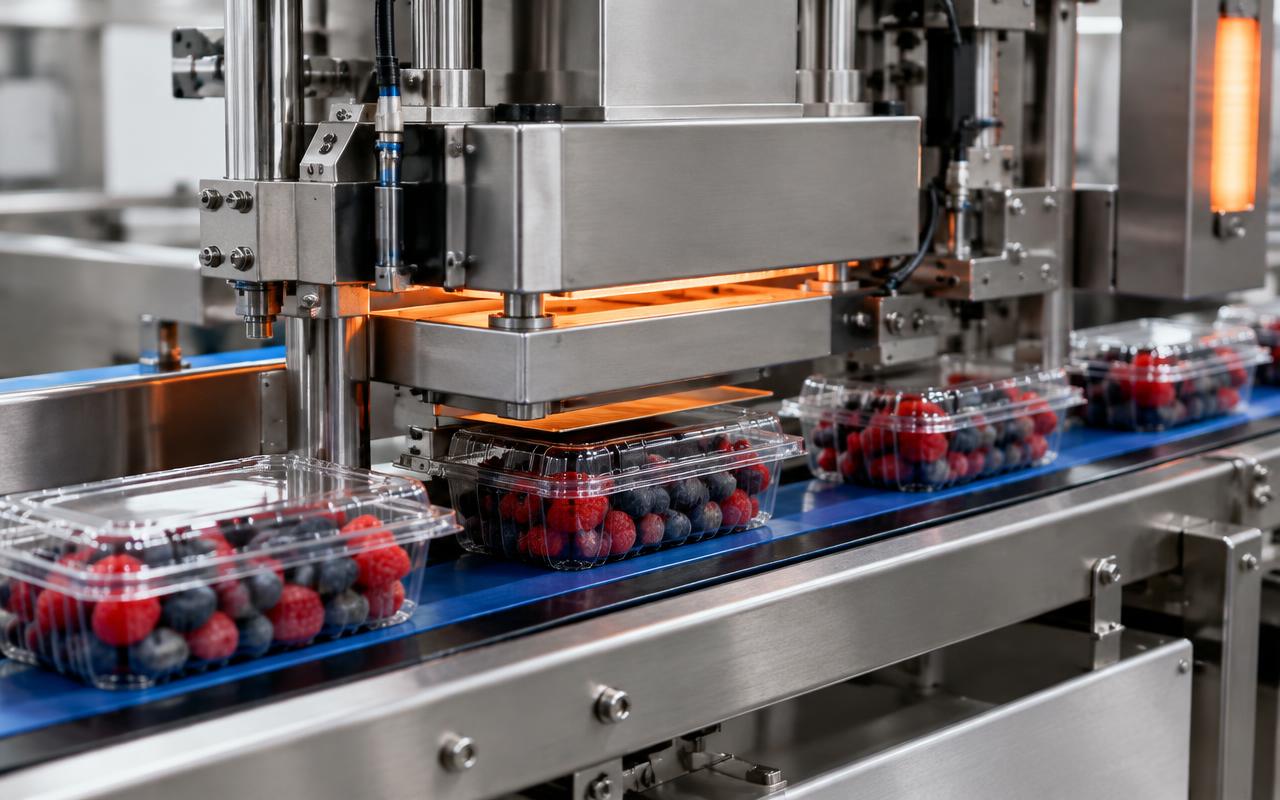
The closer should engage the package's intended closure features, not force an overfilled pack into shape. Before changing machine settings, check container seating, product clearance, rim cleanliness, and lid alignment. Crumbs or a trapped muffin liner can interfere with closure.
The clamshell closing machine handles 8-64 oz tamper-evident hinged containers at up to 80 containers per minute, as specified for the But-N-Loc closer. Actual output depends on the container and line conditions. The stated capacity range does not establish fit for a particular muffin height or cookie arrangement.
Keep that closer specification separate from complete-line figures. Pure Packaging Solutions lists complete clamshell lines with 10-100 clamshells per minute, 1-4 lanes, and up to 6 filling stations. Those are complete-line specifications, not additional speed ratings for the closer. Applicable output depends on the selected configuration, container, product, and operating conditions.
Check protection beyond the closing station
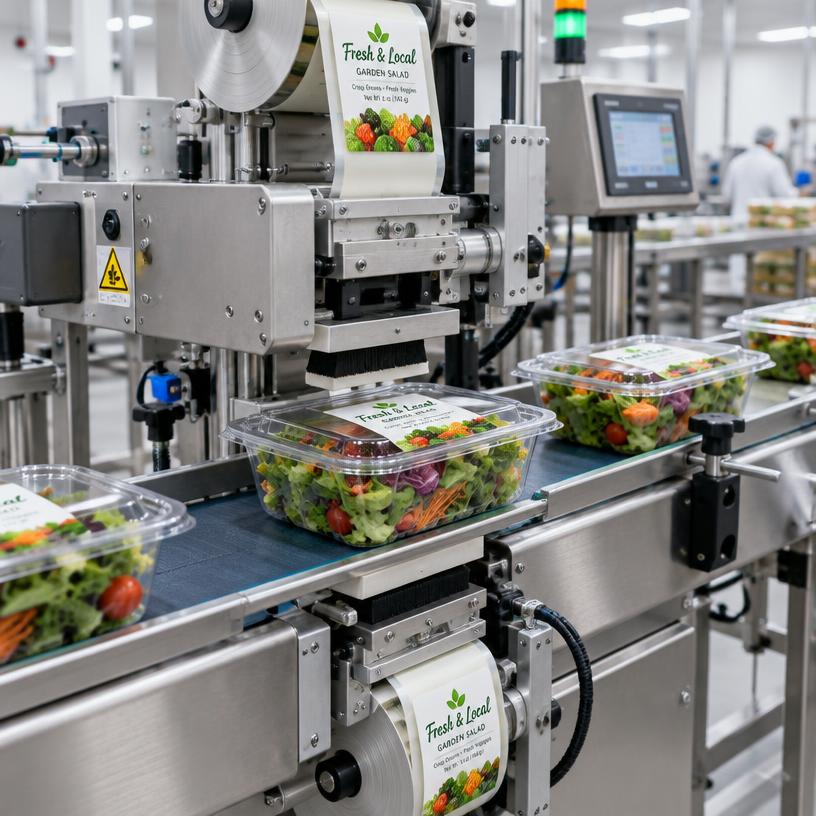
Inspect packs after labeling and case packing, too. Check whether label application changes the lid shape or whether conveyor guides squeeze the package. Confirm that the pack remains fully closed after downstream handling.
Choose a case arrangement that supports the packages without forcing lids against bakery products. Evaluate the intended case count, stacking arrangement, and distribution conditions. A closed clamshell is not automatically suitable for every stacking load.
For acceptance trials, agree on defect definitions before running. Count chipped cookies, displaced muffins, damaged toppings, incomplete closures, and distorted packages separately. Include representative product variation and planned stops. This makes it easier to identify the responsible step rather than treating every defect as a closing problem.
Questions and Answers
Why do muffin crowns get marked even when the latch closes?
Latch engagement does not prove adequate headroom. Check crown height against the lowest interior lid features, and verify that each liner sits fully in its cavity.
Should a cookie clamshell be packed tightly to prevent movement?
Provide support without compression. Tight packing can load fragile edges, while excessive space allows sliding. Test the intended arrangement through closing and distribution handling.
What should we check first when cookies break near the closer?
Inspect packs immediately before and after closing. Check stack position, transfer impacts, product in the rim, and lid contact before changing settings. Follow the equipment supplier's adjustment procedure.
Explore the machines
- Clamshell Denester — Separates nested clamshells and places them on the line.
- Clamshell Filling Systems — Accurate weighing and filling of fresh product.
- Clamshell Closing Machine — Closes and locks hinged clamshell lids automatically.
- Clamshell Labeler — Top, bottom and wrap labeling with print-and-apply options.
- End-of-Line Systems — Case packing, case sealing and palletizing.