Automatic Clamshell Packaging: Denest, Fill, Close and Pack
Oct 16, 2026
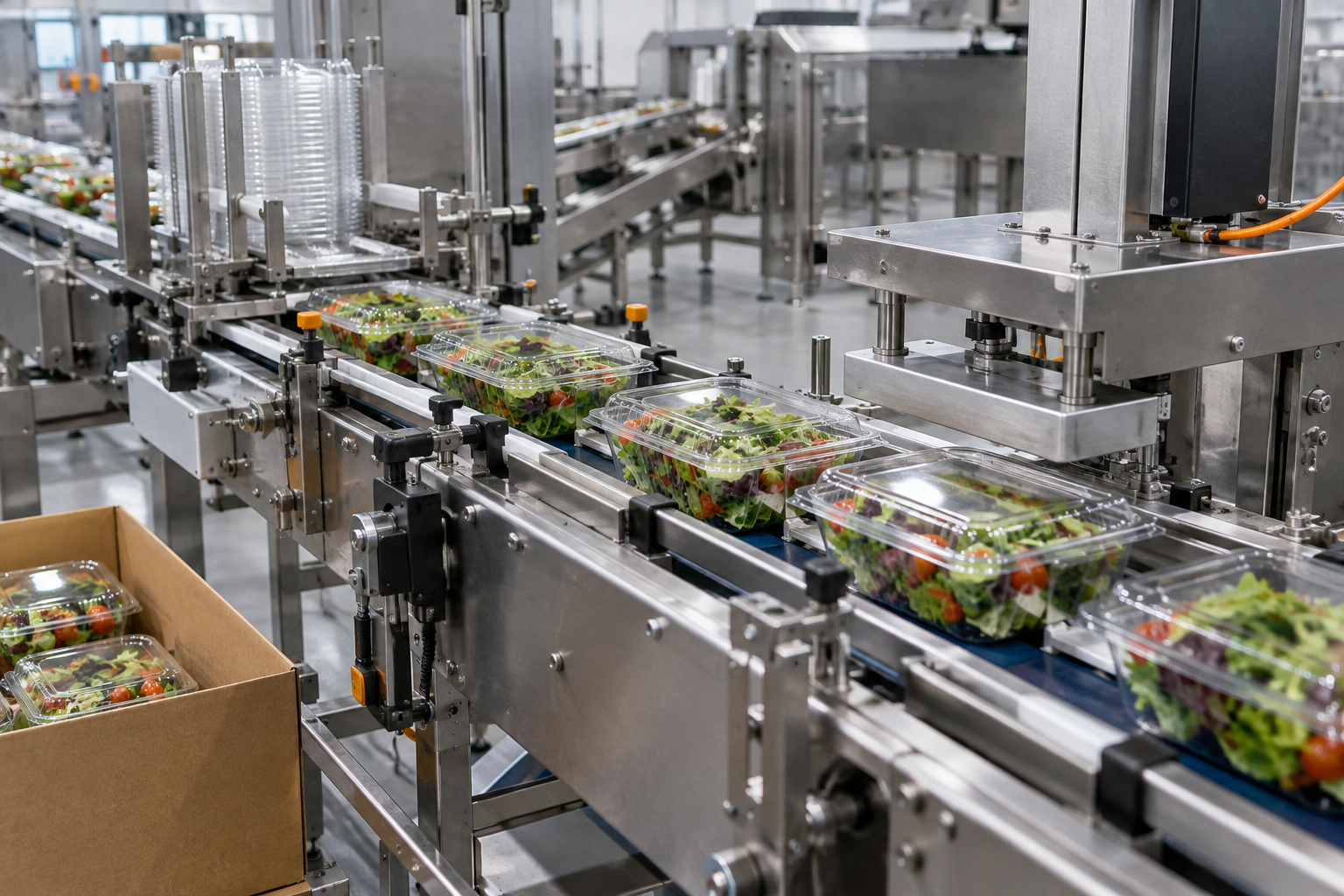
Build a balanced clamshell packaging line with practical guidance on denesting, filling, closing, labeling, case packing and acceptance testing.
Start with the package, not the machine
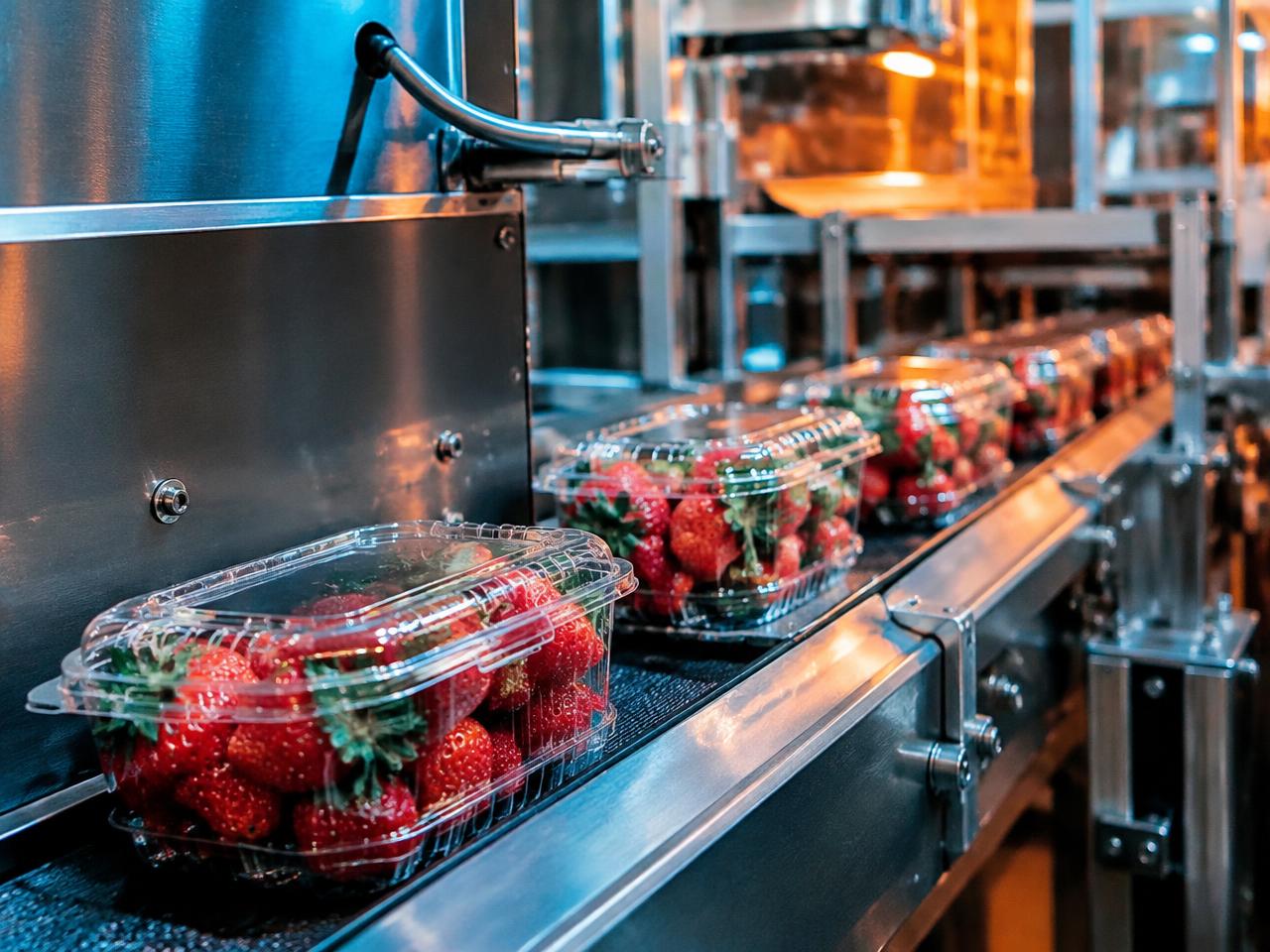
An automatic clamshell packaging line has five basic jobs: separate containers, load product, latch lids, apply labels and pack finished units into cases. Each job looks straightforward by itself. The trouble usually starts where one machine hands the package to the next.
A container arriving crooked at the filler can spill product. A berry sitting on the rim can prevent the lid from locking. A poorly positioned label can cover the opening feature. Automation only works when those handoffs are controlled.
Before choosing equipment, collect production samples of every container and product combination. Record the closed package dimensions, filled weight, hinge orientation, label position and case count. Include samples from different container lots. I would rather find a difficult stack during testing than during the first production shift.
Set a realistic production target
Work backward from good packages required per shift. Suppose the order calls for 24,000 clamshells during eight scheduled hours. That is 50 finished packages per minute if the line never stops. Allow one hour for breaks, cleaning and changeovers, and the required rate becomes about 57 packages per minute during the remaining seven hours.
That still leaves little room for unplanned interruptions. Specify both the running rate and the accepted output over a defined test period. These are different numbers.
Our clamshell closing machine handles 8-64 oz tamper-evident hinged containers at up to 80 containers per minute. That is a machine capability, not a promise that every complete line will produce 80 saleable packages per minute. Container compatibility, filling performance, labeling and case handling all affect actual output.
Denest: separate one container every time
The denester pulls individual clamshells from a stack and presents them to the conveyor or carrier. Reliable separation depends on container geometry, nesting depth, stack condition and the separation method. Thin walls, static and distorted flanges can make two containers travel together.
A clamshell denester should be evaluated with actual production containers, not just a few hand-selected samples. Test full stacks, nearly empty stacks and containers taken from shipping cases after normal storage.
- Confirm that lids face the correct direction for filling and closing.
- Check for double picks, missed picks and flange damage.
- Measure how often an operator must replenish the magazine.
- Confirm that an absent container prevents product discharge.
Magazine capacity affects labor. At 60 containers per minute, a usable stack capacity of 300 containers represents only five minutes between replenishments. That calculation belongs in the staffing plan.
Fill: control weight without damaging product
Choose the filling method around the product. Loose berries may suit a weighing system. Muffins or decorated pastries may need counted placement with controlled orientation. A system that handles small, free-flowing produce is not automatically suitable for sticky bakery items.
Keep product drops as short as the equipment layout allows, then verify the result with product trials. Bruising may not be obvious immediately. For delicate produce, inspect samples after the normal holding period as well as directly after filling.
For a nominal 16 oz package, track the average fill and its variation. An average giveaway of 0.2 oz across 24,000 packages adds up to 300 pounds of product per shift. Reducing that loss requires controlled feeding and weighing, not simply lowering the target and risking underweight packages.
Leave room for the lid to close. A package can meet its weight target and still be too full because product size and bulk density vary. Check the tallest product presentation, not just the average one.
Close: align the hinge and clear the rim
Closing starts before the lid moves. The container needs support, consistent spacing and a clean sealing or latching area. Product on the rim is a filling problem that becomes a closing defect.
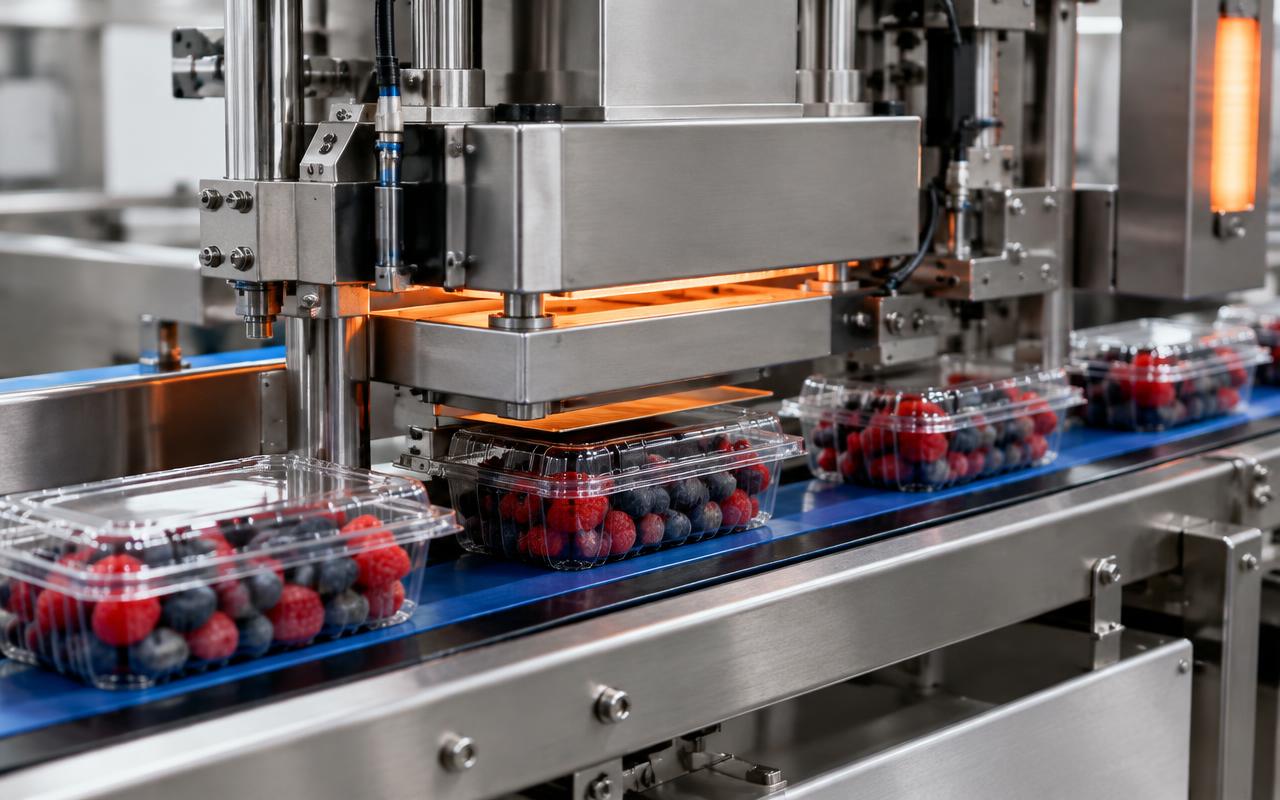
The clamshell closing machine closes and locks hinged lids automatically. Confirm compatibility with each container design, especially its hinge, latch geometry and tamper-evident features. The stated ounce range alone does not establish fit.
During trials, check every locking point. A lid can look closed from above while one corner remains unlatched. Where inspection equipment is included, establish which defects it can reliably detect. Do not assume a simple presence sensor verifies a fully locked package.
Also test the consumer opening action. The package must remain secure through handling while its tamper-evident feature functions as designed.
Label: stabilize the package before application
Label placement depends on package control. A clamshell that rocks, rotates or changes spacing will produce inconsistent results even when the label dispenser is operating correctly.
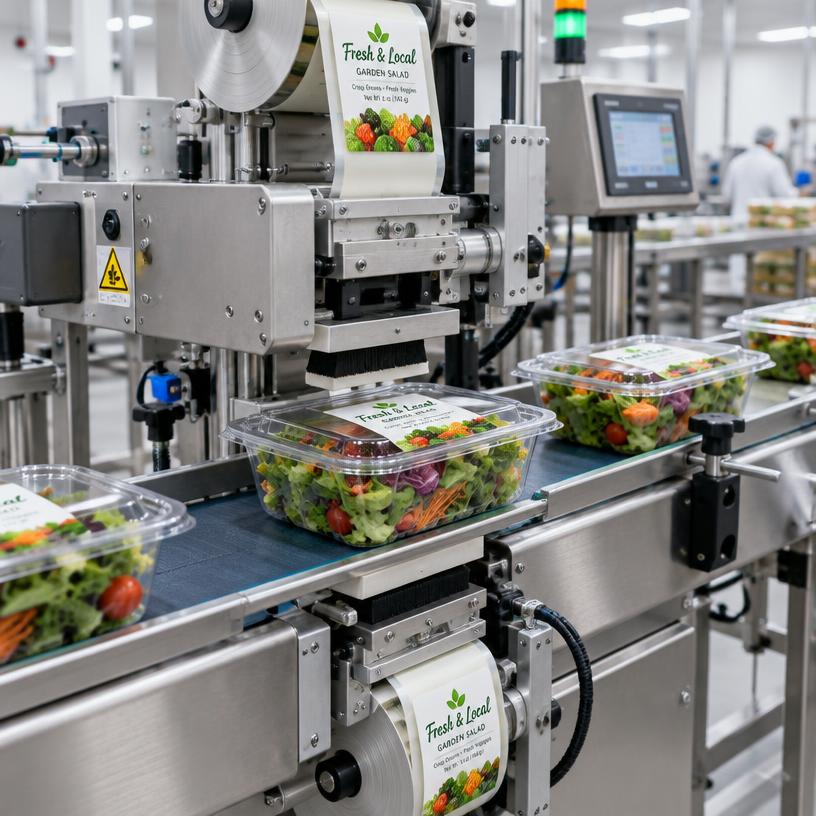
Define the application surface and acceptable placement tolerance on a drawing. Keep labels clear of opening tabs unless the approved package design specifically requires a label across that area. Bottom labeling may require conveyor arrangements that expose and support the package appropriately.
Cold produce introduces another variable: condensation. Test the label stock and adhesive on containers at actual operating temperatures and moisture conditions. A label applied successfully to a dry sample in an office proves very little.
Verify printed dates, lot codes and barcodes against the production order. Establish a reject or controlled stop procedure for missing labels and unreadable codes.
Pack: match the case operation to upstream output
Case packing is often where a balanced-looking line runs short of capacity. At 60 clamshells per minute with 12 packages per case, the downstream operation must handle five cases per minute. Include case erection, loading, sealing and removal in that calculation.
Check the loading pattern with filled packages. Clamshell lids should not carry unintended compression from an overly tight case or a poorly supported layer. Verify protection through the expected distribution conditions.
For broader packaging equipment sourcing, PackagingMachine.com is another resource to consult. Define the required case format and handoff conditions before comparing equipment.
Prove the complete line before acceptance
Run a documented acceptance trial using production containers, labels, cases and representative product. Include startup, magazine replenishment, a planned changeover and recovery from a downstream stop. Count accepted packages, rejects and downtime separately.
Make sanitation access part of that trial. Operators should be able to reach product buildup without bypassing guards or creating unsafe access. Assign responsibility for line controls, fault signals and restart behavior. Five machines need to behave like one coordinated system.
Questions and Answers
Can one line package both berries and muffins?
Possibly, but the filler and product handling usually need the closest review. Test both products for placement, damage, rim clearance and changeover requirements before specifying shared equipment.
How much accumulation should sit before case packing?
Base it on the interruption you need to absorb. At 60 packages per minute, a 30-second pause requires space for 30 packages, with handling that prevents lid damage and unstable stacking.
What should happen when the denester misses a container?
The controls should inhibit the corresponding fill discharge and manage the empty position through downstream stations. Verify that sequence during testing, including how normal production resumes.
Explore the machines
- Clamshell Denester — Separates nested clamshells and places them on the line.
- Clamshell Filling Systems — Accurate weighing and filling of fresh product.
- Clamshell Closing Machine — Closes and locks hinged clamshell lids automatically.
- Clamshell Labeler — Top, bottom and wrap labeling with print-and-apply options.
- End-of-Line Systems — Case packing, case sealing and palletizing.