Automatic Clamshell Closer: How It Works and When You Need One
Sep 28, 2026
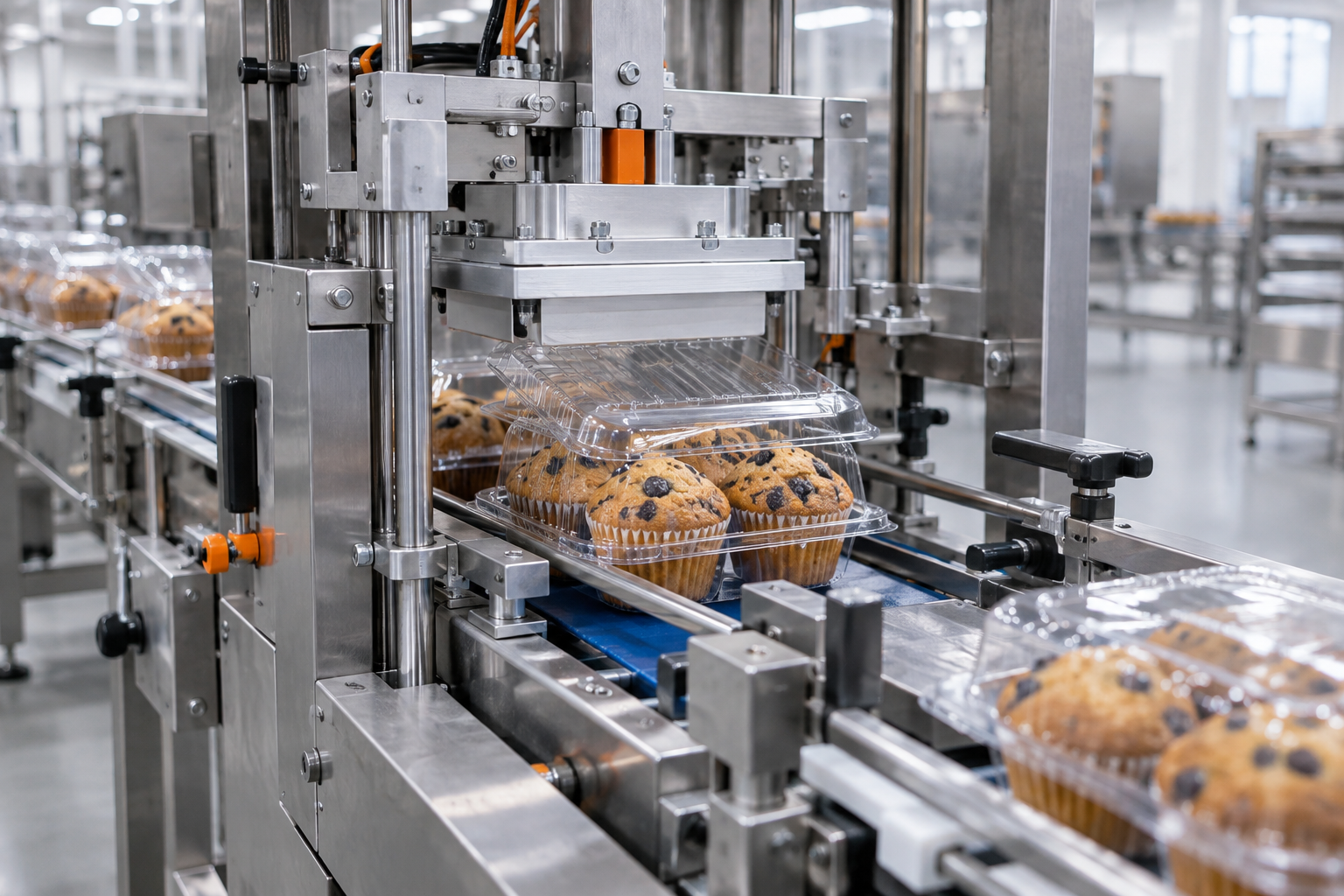
Learn how automatic clamshell closers work, what causes closing problems, and when adding one makes sense for your produce or bakery line.
What an Automatic Clamshell Closer Actually Does
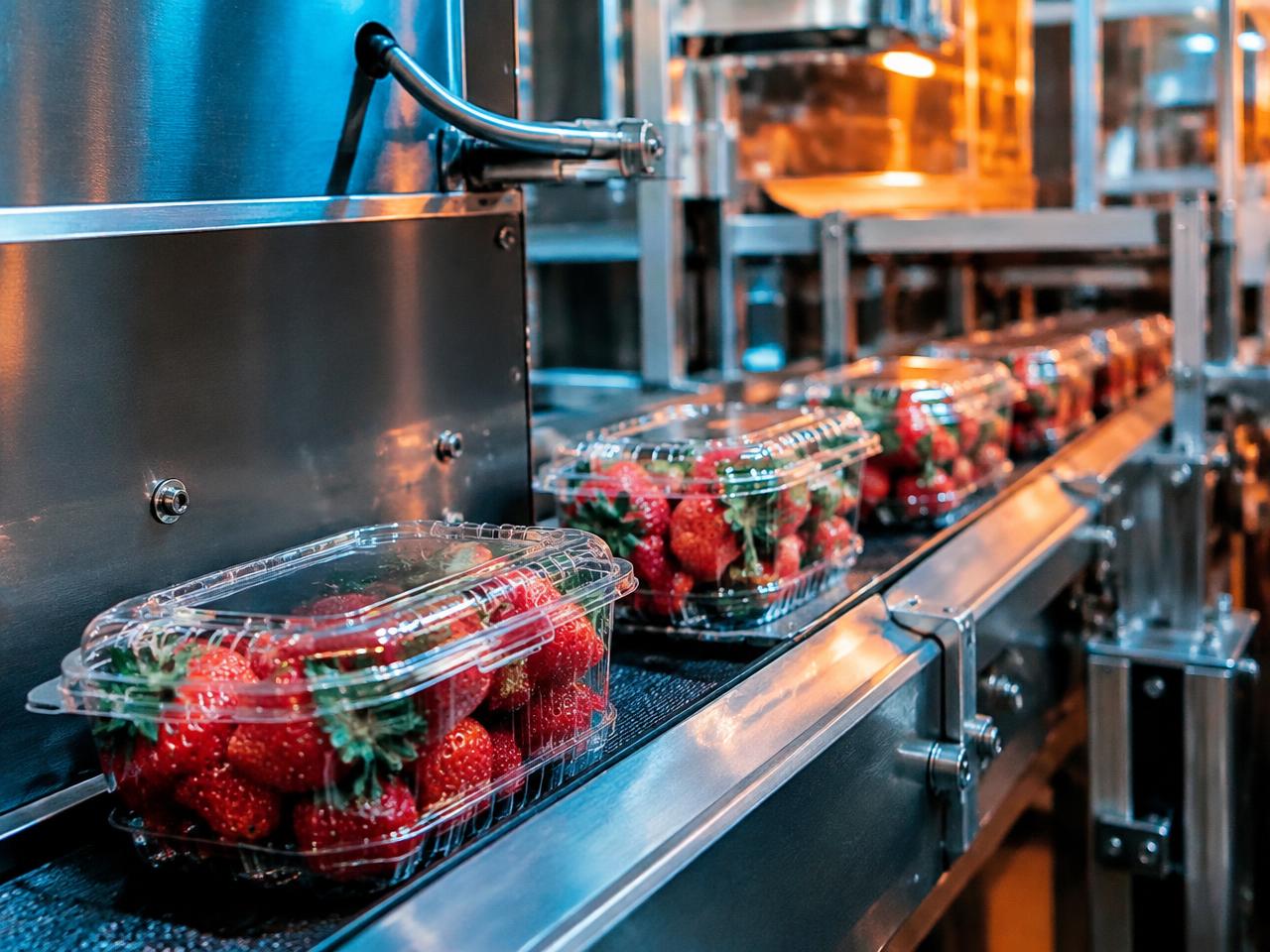
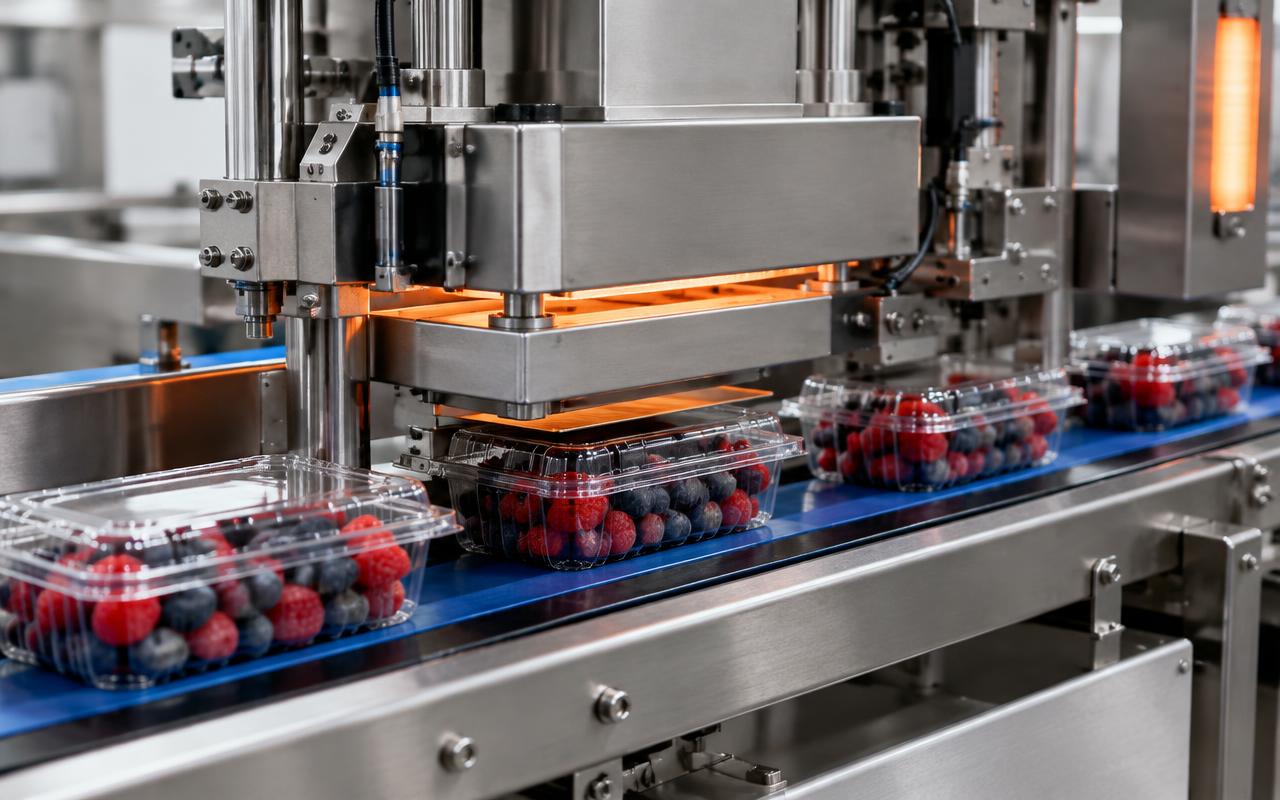
An automatic clamshell closer folds the hinged lid over a filled container, aligns the mating edges, and applies controlled pressure until the closure features engage. That sounds simple. Doing it repeatedly without crushing a muffin, trapping spinach in the rim, or leaving one corner open takes careful container handling.
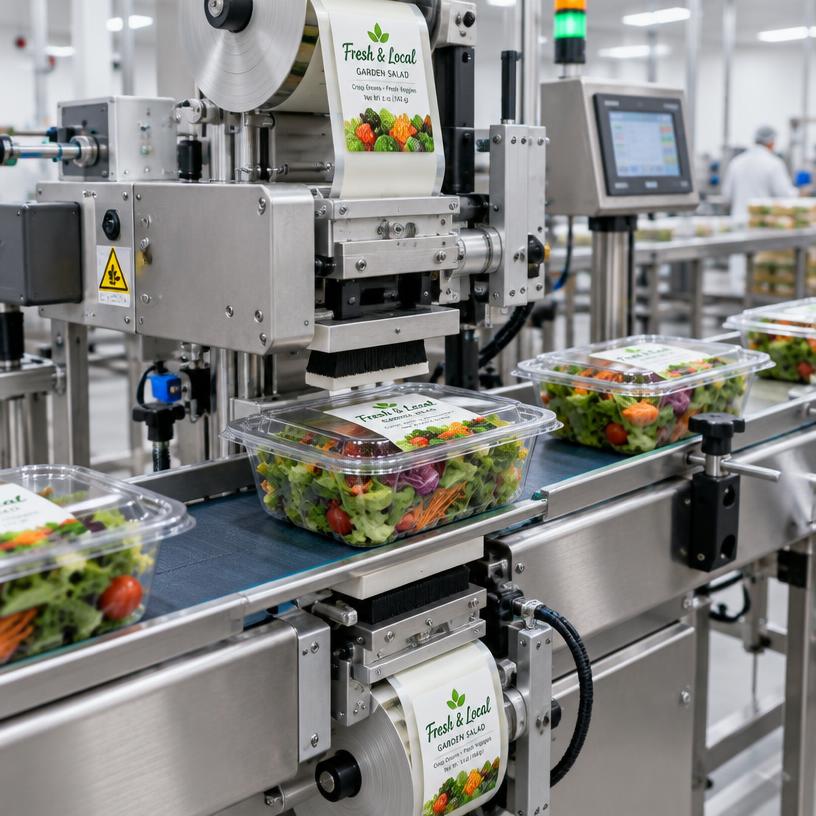
The machine belongs after filling and before any downstream operation that requires a closed package, such as wrap labeling or case packing. Its job is not to fix a poor fill or straighten a damaged container. Its job is to close a suitable, correctly presented package consistently.
Clamshell Automation’s Clamshell Closing Machine handles 8-64 oz tamper-evident hinged containers at up to 80 containers per minute. Actual production performance depends on the container, product, feed consistency, and the rest of the line. Treat the maximum rate as a capability to verify with your package, not a promise for every shift.
How the Closing Sequence Works
1. The filled container enters in a controlled position
The closer needs the container body and open lid presented in the intended orientation. Guides control sideways movement, while the conveyor or transfer arrangement carries the package into the closing section. Depending on the design, spacing devices may establish a gap between containers.
That gap matters. If packages crowd together, one open lid can interfere with the next container. If the upstream filler releases packages irregularly, the closer may spend part of its time waiting and then receive a cluster it cannot accept properly.
2. The lid folds toward the base
A lid-folding mechanism brings the hinged lid over the product. Different closers use different combinations of guides, belts, or actuated components. The motion must suit the hinge stiffness, lid shape, and height of the filled package.
For bakery products, check the tallest item, not just the average one. A cupcake sitting high in its pocket can touch the lid during folding. For leafy greens, loose leaves extending above the rim can get swept into the closure.
3. Controlled pressure engages the closure
Once the lid and base align, closing components press the mating features together. The package design determines where pressure is needed. A front latch, perimeter snap, and tamper-evident locking feature do not necessarily require the same contact pattern.
More pressure is not the first answer to an open corner. Misalignment, a warped flange, or product caught in the rim may be the real cause. Excessive force can buckle the package without correcting any of those problems.
4. The closed package moves downstream
After closing, the container transfers to inspection, labeling, or case packing. Confirm whether closure detection and automatic rejection are included in a proposed system. A machine that closes packages does not automatically verify every latch.
A tamper-evident closure also is not the same as a hermetic seal. Closing a snap-fit clamshell does not create an airtight barrier or establish product shelf life.
What Makes a Package Run Well?
Start with actual production containers from your supplier. Two clamshells sold for the same nominal capacity can have different hinges, rim profiles, and locking features. Capacity alone does not establish machine compatibility.
- Consistent container geometry: Warped lids and distorted bases make alignment harder.
- A clear closing rim: Berries, crumbs, stems, and leaves must stay out of the engagement area.
- Controlled fill height: Product should not prevent the lid from reaching its intended closed position.
- Stable presentation: Containers need to arrive flat, correctly oriented, and adequately spaced.
- Compatible transfers: Conveyor gaps and guide transitions should not snag the base or swing the lid unexpectedly.
I would ask for a trial with filled packages, not just empty shells. Include normal variation: the tallest bakery item, the fullest acceptable produce pack, and containers from more than one production lot. An empty-package demonstration can miss the exact interference that causes trouble during production.
When You Need an Automatic Closer
Manual closing is limiting sustained output
Measure the line over a representative production period. If the filler can supply 45 packages per minute but manual closing sustains only 32, the accumulation between those operations will keep growing unless production slows. Those are example operating rates, not machine specifications.
Watch where people spend their time. Are they closing lids, reopening bad closures, or moving packages because the workstation layout is awkward? Fixing a poor transfer may help. But if repetitive lid closing remains the constraint, automation deserves a trial.
Closure quality varies through the shift
Manual operators may miss a rear corner or partially engage a locking feature, especially when the package looks closed from above. Check defects by container style, product, and time of day. Repeated rework at the closing station is a stronger purchasing signal than a vague request to increase efficiency.
You are building a more continuous line
A closer becomes more useful when upstream operations can supply it consistently. If employees still struggle to separate nested containers, adding a closer may simply move the bottleneck. A Clamshell Denester separates nested clamshells and places them on the line, addressing that earlier handling step.
Downstream capacity matters too. A stopped labeler or full case-packing table can stop the closer. When reviewing the broader equipment scope with a supplier such as Packaging Machine, include transfers, accumulation, and downstream handling rather than evaluating each machine in isolation.
Build the Purchase Decision Around Measured Results
Record current output, closing labor hours, rework, damaged packages, and changeover time. Then compare those figures with a filled-product trial. Count good packages leaving the system, not containers entering it.
For example, removing four labor hours per day from lid closing across 250 operating days represents 1,000 hours annually. Multiply that by your actual loaded labor cost. Count it as cash savings only if spending truly falls; otherwise, describe it as labor capacity reassigned to other work.
Include installation, utilities, training, sanitation time, replacement wear parts, and changeover requirements in the calculation. A line running one berry container all day presents a different operating problem from a bakery changing among six package styles.
Questions and Answers
Can a closer handle both berry and bakery clamshells?
Potentially, but nominal capacity is not enough to confirm compatibility. Have the supplier test each container’s hinge, footprint, height, and locking features with the intended product inside.
Will an automatic closer fix leaves trapped in the rim?
No. Correct the fill presentation before closing. Trapped leaves can prevent engagement, and additional closing pressure may damage the container or product rather than clear the rim.
How should we verify a tamper-evident clamshell after closing?
Use the container supplier’s closure criteria and check every required locking feature. During trials, confirm full engagement and proper first-opening behavior. Separately verify any proposed detection system’s ability to identify incomplete closures.
Explore the machines
- Clamshell Denester — Separates nested clamshells and places them on the line.
- Clamshell Filling Systems — Accurate weighing and filling of fresh product.
- Clamshell Closing Machine — Closes and locks hinged clamshell lids automatically.
- Clamshell Labeler — Top, bottom and wrap labeling with print-and-apply options.
- End-of-Line Systems — Case packing, case sealing and palletizing.